Salt, Fat, and the Perfect Bite: How to Build a Charcuterie Board That Actually Honors Your Wine
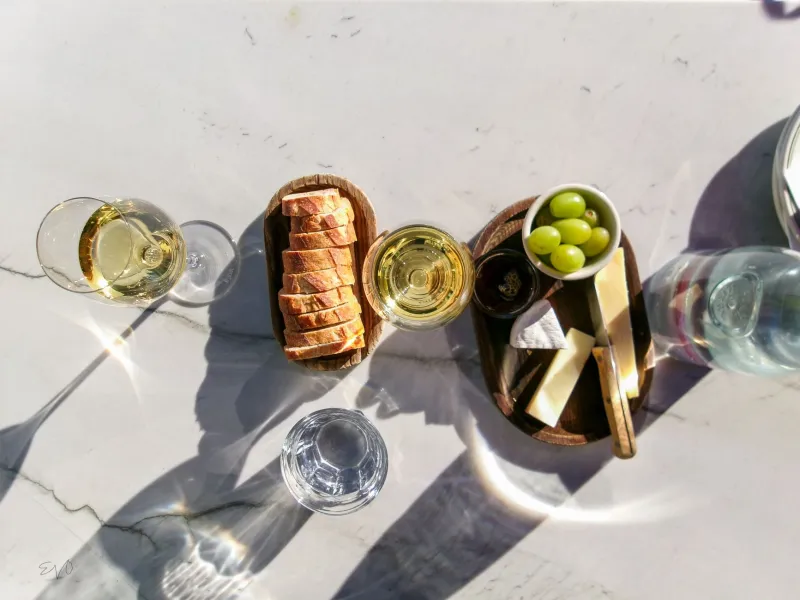
There is a moment that happens at nearly every wine bar, and it is entirely familiar. The server sets down a beautifully arranged board — curling ribbons of prosciutto, amber wedges of aged cheese, a scattering of cornichons, perhaps a smear of whole-grain mustard — and a hush of appreciation settles over the table. Then comes the inevitable question: where do you even begin?
For many guests, the answer is instinct. Reach for what looks appealing, take a sip of wine, and hope for the best. But a well-curated charcuterie board at a serious wine bar is not assembled by accident. Every element has a purpose, and understanding that purpose changes not only how you eat, but how deeply you enjoy what is in your glass.
At Annabel's, we believe that food and wine are equal partners at the table. What follows is a practical guide to reading a charcuterie board with intention — and ordering one that works in harmony with whatever you have chosen to drink.
The Three Pillars: Salt, Fat, and Acidity
Before considering specific pairings, it helps to understand the three forces that govern how food and wine interact on the palate.
Salt softens the perception of tannins in red wine. A briny olive or a slice of cured salami can make a grippy Cabernet Sauvignon feel rounder and more approachable. This is not a trick — it is chemistry. Sodium ions suppress bitter taste receptors, allowing the fruit and structure of the wine to come forward.
Fat coats the palate and slows the absorption of alcohol and acid. A rich, creamy brie or a buttery triple-cream cheese creates a cushion that makes high-acid wines feel less sharp and more generous. This is precisely why a glass of Champagne and a slice of brie is one of the most enduring combinations in the world of wine.
Acidity — found in pickled elements, fresh fruit, and mustards — acts as a palate cleanser, cutting through richness and preparing your mouth for the next sip. A well-placed cornichon or a few slices of pickled red onion after a bite of fatty coppa resets the palate entirely, allowing you to taste the wine as though for the first time.
Keep these three pillars in mind, and the logic of nearly any charcuterie board begins to reveal itself.
Understanding the Meats
Cured meats fall along a spectrum from delicate to assertive, and matching their intensity to your wine is one of the most reliable ways to build a successful pairing.
Prosciutto di Parma, with its silky texture and subtle sweetness, is among the most wine-friendly meats on any board. Its low-salt, high-fat profile makes it an exceptional companion for crisp, dry whites — a Pinot Grigio from Alto Adige, a Vermentino from Sardinia, or a domestic Albariño from California's Central Coast. The wine's acidity cuts through the fat while the prosciutto's gentle sweetness softens the wine's mineral edge.
Soppressata and salami, which carry more pronounced salt and spice, pair naturally with medium-bodied reds. A Sangiovese, a Grenache, or a domestic Zinfandel from Sonoma all have enough fruit weight to stand alongside the meat's boldness without being overwhelmed.
Coppa, made from the neck and shoulder of the pig, occupies a middle ground — richer than prosciutto, more nuanced than salami. It is particularly flattering alongside a glass of Barbera d'Asti or a cool-climate Syrah, where the wine's dark fruit and subtle pepper echo the meat's complexity.
Reading the Cheese Selection
Cheese selection on a curated board is rarely random. Most wine bars organize their offerings across a spectrum of milk types and aging levels, each of which interacts differently with wine.
Fresh cheeses — chèvre, burrata, ricotta — are high in acidity and moisture, making them natural partners for sparkling wines, crisp whites, and dry rosés. Their brightness mirrors the wine's freshness, creating a clean, lively pairing.
Semi-firm cheeses, such as Manchego or Comté, offer a balance of nuttiness and mild tang. These are among the most versatile cheeses on a board, pairing comfortably with both whites and lighter reds. A domestic aged Comté-style cheese alongside a white Burgundy or an Oregon Chardonnay is a combination of quiet brilliance.
Aged, hard cheeses — Parmigiano-Reggiano, aged Gouda, aged Cheddar — are where things become genuinely interesting for red wine drinkers. The long aging process concentrates salt and develops crystalline structures that create an almost savory, umami-rich bite. This intensity demands a wine with substance. An aged Gouda alongside a Napa Valley Cabernet Sauvignon or a bold Malbec is a pairing of equals: the cheese's caramel-like depth meets the wine's dark fruit and firm tannins, and neither one flinches.
Washed-rind and blue cheeses require the most thoughtful approach. Their pungency and intensity can overwhelm dry table wines, but they find extraordinary harmony with sweet or fortified options — a Sauternes, a Tawny Port, or a domestic late-harvest Riesling. If your board includes a blue cheese, consider it an invitation to explore the sweeter end of the wine list.
The Supporting Cast: Accompaniments That Do Real Work
The elements surrounding the meats and cheeses are not decorative. They are functional.
Honey drizzled over a sharp aged cheese softens its bite and bridges the gap to a fruity red or a lightly sweet white. Fruit preserves — fig jam in particular — perform a similar role, adding sweetness that makes tannic wines feel more generous. Nuts, especially Marcona almonds or candied walnuts, contribute fat and a gentle bitterness that complements both cheese and wine. Cornichons and pickled vegetables provide the acidity that resets the palate between bites, ensuring that every sip of wine lands on a clean, receptive palate.
Sliced baguette and neutral crackers serve as vehicles, but they also dilute intensity. When you want to taste a cheese or meat on its own terms, set the cracker aside.
Ordering with Intention
The next time you find yourself before a charcuterie menu, consider your wine first. If you have ordered a bottle of bright, high-acid white, look for prosciutto, fresh cheeses, and plenty of pickled accompaniments. If you have chosen a structured, tannic red, lean toward aged cheeses, cured salamis, and the richness of a washed-rind selection.
And if you are unsure, ask. A knowledgeable server or sommelier will not only suggest the right board for your wine — they will explain why, and that explanation is half the pleasure of an evening well spent.
At Annabel's, every board is assembled with the wine list in mind. We invite you to slow down, taste deliberately, and discover how much more there is to a single bite when you understand what it is doing for your glass.