How to Read a By-the-Glass List Before You Ever Take Your Seat
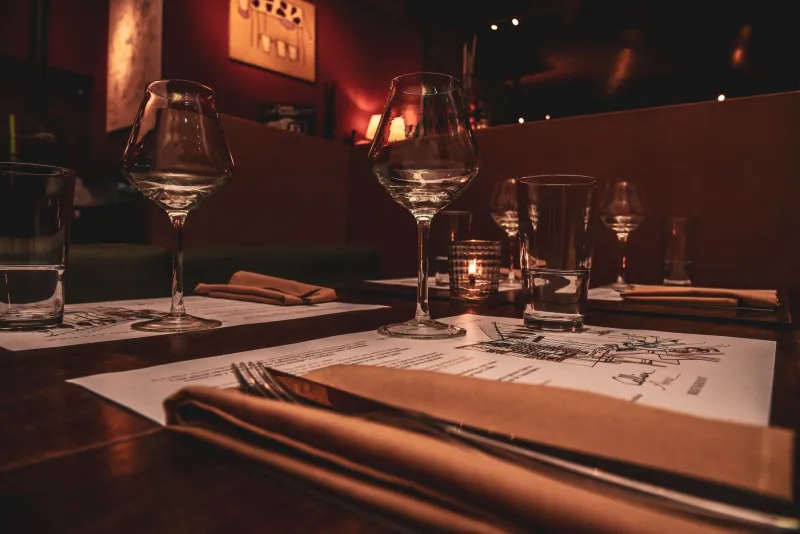
Before the first candle is lit at your table, before the bread arrives, before you have exchanged a single word with your server — the wine bar has already told you something important about itself. It told you the moment you opened the by-the-glass menu.
Most guests do not read it that way. They scan for a familiar name, locate a comfortable price point, and move on. That is entirely understandable. But it leaves a great deal of valuable information on the table, so to speak. A thoughtfully assembled by-the-glass program is one of the most underappreciated storytelling tools in the American dining landscape, and learning to decode it takes only a few minutes and a willingness to look a little closer.
Why the By-the-Glass List Matters More Than You Think
The by-the-glass selection is where a wine bar's values become visible. Unlike the bottle list — which can run long and still feel impersonal — the poured selections represent a series of deliberate, high-stakes commitments. Every wine on that list must be opened, maintained, and sold within a reasonable window. A bottle that sits open too long loses its integrity. That means the team behind the program has to believe in each selection deeply enough to stake their reputation on moving it.
This is also where financial risk lives. Offering an unusual, lower-production wine by the glass requires confidence that guests will trust the recommendation and try something unfamiliar. When a wine bar takes that risk consistently, it is telling you something: this is a place that cares more about your experience than about playing it safe.
The Signals Worth Looking For
Regional Diversity
A by-the-glass list that spans Burgundy, the Finger Lakes, Rioja, and the Willamette Valley is doing something intentional. It is not trying to be everything to everyone — it is demonstrating a genuine curiosity about what wine looks like across different soils, climates, and traditions. Contrast this with a list built almost entirely around California Cabernet and French Chardonnay. There is nothing wrong with those wines, but a list that stops there is telling you the program was assembled with the path of least resistance in mind.
Geographic breadth is not snobbery. It is hospitality — the hospitality of saying, we have thought about what might surprise and delight you, not just what you already know.
Producers You Have Not Heard Of
This is perhaps the most reliable signal of all. When a list features wines from small, independent producers — the kind of names that do not appear in grocery store aisles or airport lounges — it means someone on staff has done real sourcing work. They have cultivated relationships with importers, attended trade tastings, and made the effort to find bottles that tell a more interesting story than the ones with the largest marketing budgets.
At Annabel's, this is a point of particular pride. When you see an unfamiliar label on our by-the-glass menu, that is an invitation, not a warning. Ask about it. There is almost always a story worth hearing.
Seasonal Rotation
A static by-the-glass list — one that looks identical in February and in August — suggests a program that was set and forgotten. A list that changes with the seasons, or even more frequently, indicates an active, engaged wine team that is paying attention to what is drinking well right now. It also signals a kitchen relationship: the best wine programs evolve in conversation with the menu, not independently of it.
If you visit a wine bar regularly and the by-the-glass list looks different each time, that is a very good sign. It means the people running the program are still curious.
Price Spread and Intention
Look at the range of prices on the list. A program that offers only a narrow band — say, everything clustered between $14 and $17 — may be optimizing for simplicity rather than depth. A list with genuine range, from an approachable everyday pour to a more special-occasion glass, suggests a team that has thought about different kinds of guests and different kinds of evenings.
Equally telling is what occupies the higher price points. If the most expensive by-the-glass options are well-known prestige labels, the program is selling recognition. If they are smaller-production, terroir-driven bottles that genuinely justify the price through quality rather than brand, the program is selling something more valuable: trust.
How to Use This Information at the Bar
Once you have spent a moment reading the list with this lens, you are in a much stronger position to have a real conversation with your server or sommelier. Instead of asking the default question — "what do you recommend?" — you can ask something more specific: I noticed you have a wine from the Jura on here. How does it drink alongside the charcuterie? Or: This Txakoli is not something I see often by the glass. What made you choose it?
These questions do two things simultaneously. They signal that you are engaged and curious, which tends to bring out the best in any wine professional. And they give you genuinely useful information to navigate the rest of your evening.
What Annabel's List Is Trying to Say
Every by-the-glass list is a kind of editorial statement. It reflects what the people behind the bar find exciting, what they believe their guests deserve to experience, and how seriously they take the responsibility of pouring wine into someone's evening.
When you sit down at Annabel's, we hope you will take a moment to read that statement before you make your choice. Not because we need the validation — but because the conversation that follows tends to be a better one, and the glass that lands in front of you tends to feel more like a discovery than a transaction.
That, in the end, is what a thoughtful by-the-glass program is really for.