How to Order a Wine Flight Like You Know Exactly What You're Doing
How to Order a Wine Flight Like You Know Exactly What You're Doing
There is a particular kind of confidence that comes from sitting down at a wine bar, opening the menu, and knowing — really knowing — what you want. Not because you have a sommelier's credential or a cellar full of aged Bordeaux at home, but because you understand how the experience is designed to work in your favor. A well-constructed wine flight is one of the most generous offerings a wine bar can extend to its guests. It invites comparison, rewards curiosity, and makes even a Tuesday evening feel like an occasion.
At Annabel's, flights are curated with intention. But whether you are visiting us for the first time or returning for a familiar seat at the bar, the following guide will help you get the most out of every pour.
What Exactly Is a Wine Flight?
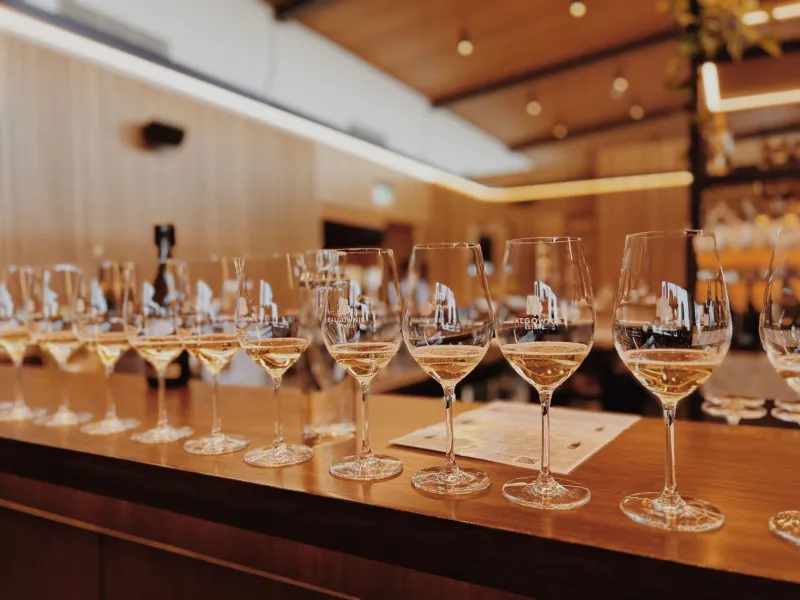
A wine flight is a curated selection of wines — typically three to five pours — served together so guests can taste and compare them side by side. The pours are smaller than a standard glass, usually two to three ounces each, which means you can explore several wines without committing to a full serving of any single one.
Flights are organized around a theme. That theme might be a grape variety explored across different regions, a single producer's range of vintages, a stylistic spectrum from light to full-bodied, or a geographic journey through a particular wine country. The organizing principle matters because it gives your tasting a narrative — a beginning, a middle, and a satisfying conclusion.
When you open a flight menu, look first for the theme before you look at the individual wines. Understanding the concept behind the selection will help you taste more deliberately and notice details you might otherwise miss.
Reading the Menu Without Feeling Lost
Flight menus can feel dense at first glance. You will encounter unfamiliar grape names, regional designations, and vintage years, often with minimal explanation. Here is a practical approach: read each wine's descriptor, but do not try to memorize or analyze every word before your glasses arrive. Let the descriptions orient you — light versus full-bodied, crisp versus round, fruit-forward versus earthy — and then set the menu aside.
If you are uncertain about a selection, ask your server or bartender. At Annabel's, our staff is trained to guide guests through the menu without making the conversation feel like a lecture. A simple question — "Which of these flights would you recommend for someone who usually enjoys a dry rosé?" — will get you a genuine, useful answer.
Also note the order in which the wines are listed. Flight menus are almost always arranged in the intended tasting sequence. Trust that sequence.
The Right Order Makes All the Difference
Wine flights are designed to be tasted from left to right, or from the first pour to the last, following a deliberate progression. In general, that progression moves from lighter to fuller-bodied wines, from lower to higher tannin, and from younger to older vintages. This sequence exists for a reason: heavier wines coat your palate and make lighter wines that follow them taste thin and unremarkable. Starting with the most delicate pour preserves your ability to appreciate each wine on its own terms.
For white and sparkling flights, the progression typically runs from crisp and high-acid (think Champagne or Albariño) toward richer, more textured styles. For red flights, you might begin with a bright, low-tannin Pinot Noir and finish with a structured Cabernet Sauvignon. Mixed flights — those that include both whites and reds — usually place whites first.
If you accidentally taste out of order, do not worry. Take a bite of plain bread or a neutral cracker, drink some water, and reset.
What to Pay Attention to in Each Sip
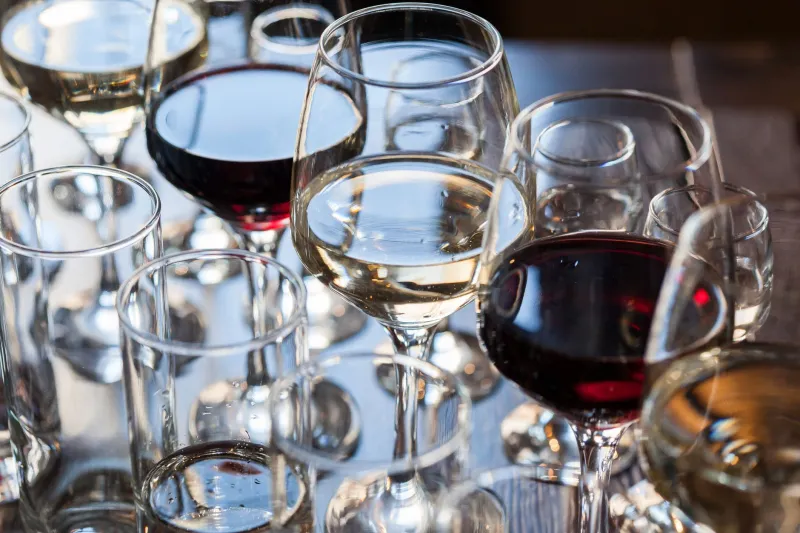
You do not need a technical vocabulary to taste wine well. What you need is a moment of genuine attention. Before you sip, take a look at the color — is it pale and nearly translucent, or deep and opaque? Give the glass a gentle swirl and bring it close to your nose. What do you smell? Fruit, earth, oak, flowers, spice? Your nose will tell you more than your palate will.
When you sip, let the wine rest on your tongue for a second or two before swallowing. Notice the weight of it — does it feel light as water or rich and coating? Is there a puckering sensation along the sides of your cheeks? That is acidity. Does the back of your mouth feel dry and grippy? That is tannin.
Finally, pay attention to the finish — the flavor that lingers after you swallow. A long, evolving finish is generally a sign of quality. A wine that disappears immediately is not necessarily poor, but it is telling you something.
When you move to the next pour, take note of what changed. That comparison — that moment of contrast — is the entire point of a flight.
A Few Habits That Elevate the Experience
Order a small plate of food alongside your flight. Wine and food interact in ways that can dramatically change what you taste. A briny olive can make a crisp white wine taste even fresher. A bite of aged cheese softens a tannic red. At Annabel's, our kitchen offers several small plates designed with exactly this kind of pairing in mind.
Take your time. A flight is not a race, and the wines in front of you deserve more than a hurried sip between conversations. You do not need to be silent or overly serious — enjoy the company you are with — but allow yourself a few unhurried moments with each glass.
Finally, keep a few notes if you are inclined. A brief record of what you enjoyed and why is more useful than any wine app or rating system. Your own preferences, clearly articulated to yourself, are the best guide to what you should order next.
The Takeaway
A wine flight is an invitation — to explore, to compare, and to develop a more personal relationship with what is in your glass. The ritual of it, the progression from one pour to the next, is designed to make you a more attentive, more confident taster. You do not need to know everything about wine to enjoy a flight. You only need to show up curious and give each glass the attention it deserves.
We look forward to pouring for you soon.