Earning Your Stool: An Insider's Guide to Wine Bar Etiquette for the First-Time Guest
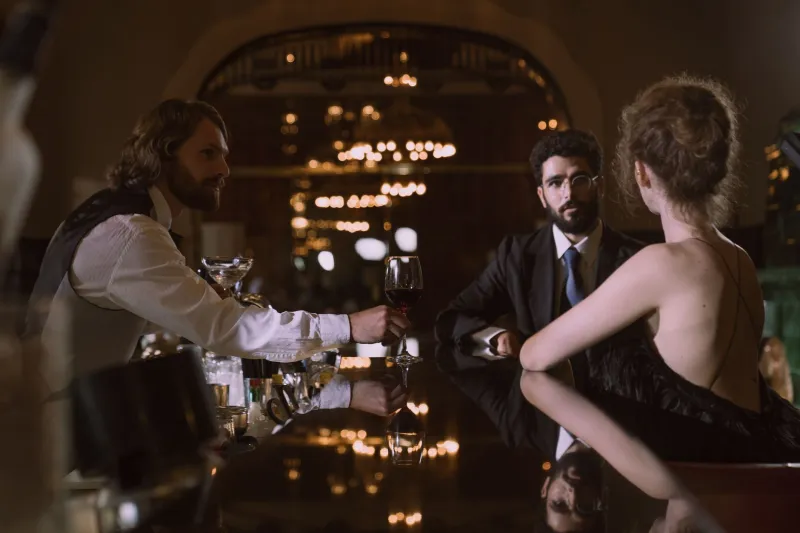
There is a particular kind of ease that settles over a wine bar regular. It is visible before they even order—the way they move through the room, the nod exchanged with the bartender, the instinctive choice of seat. For the newcomer, that ease can feel like a private language nobody taught them. But it is not a language of exclusion. It is simply the product of accumulated understanding, and every regular was once a first-timer who had to learn it.
The good news is that wine bar etiquette is neither rigid nor intimidating once you understand its underlying logic. It is rooted in mutual respect—for the staff, for fellow guests, and for the particular atmosphere that makes these establishments so worth returning to.
Read the Room Before You Read the Menu
The first and perhaps most important skill a newcomer can develop is observation. Before you reach for the wine list, take a moment to absorb the environment around you. Is the room buzzing with conversation, or does a more contemplative quiet prevail? Are guests lingering over single glasses or cycling through bottles? Is the bartender mid-rush or moving at a measured pace?
This initial reading tells you a great deal about how to calibrate your own presence. A wine bar on a busy Friday evening calls for a certain patience—your questions are welcome, but brevity is considerate. A quieter Tuesday night, by contrast, may be precisely the moment to ask the sommelier for a recommendation, linger over a tasting note, or invite a longer conversation about what is open that evening.
The rhythm of the room is not accidental. It has been shaped by the staff and regulars over time, and the most gracious thing a newcomer can do is acknowledge it.
The Bartender's Clock Runs Differently Than Yours
One of the subtler adjustments first-time guests must make involves the pace of service at a wine bar. Unlike a casual bar where orders are rapid-fire and turnover is constant, a wine bar operates with deliberateness. Pouring, recommending, and explaining are all part of the service, and they take time.
This means that hovering, waving, or signaling impatiently is not only unnecessary—it disrupts the experience for everyone nearby. The bartender sees you. They are simply attending to the guest before you with the same care they will extend to you momentarily.
When your moment arrives, be reasonably prepared. You need not have made a firm decision, but having a general sense of what you enjoy—light or full-bodied, Old World or New World, something adventurous or something familiar—will help the conversation move efficiently and productively. Regulars know their preferences. Newcomers who communicate theirs clearly are welcomed just as warmly.
Conversation: When to Open, When to Settle
Wine bars are among the few remaining spaces in American life where genuine conversation between strangers still happens organically. The shared table, the communal bar top, the proximity of seating—all of it creates conditions that are naturally sociable. But that sociability has its own etiquette.
Engagement should always be invited before it is assumed. A guest who is reading, writing, or gazing quietly into their glass is not necessarily lonely—they may be enjoying precisely the solitude they came for. A brief, friendly remark is always acceptable as an opener, but it should be offered lightly and released easily if not reciprocated.
With regulars in particular, newcomers sometimes misread familiarity as an open invitation. A regular who is deep in conversation with the bartender or another known guest is not being unfriendly by not extending the circle immediately. Patience and genuine curiosity, expressed at the right moment, are far more effective introductions than enthusiasm alone.
Ordering With Intention, Not Performance
There is a temptation, especially for those new to wine bars, to order in a way that signals knowledge—to name-drop regions, cite vintages, or ask questions designed to demonstrate sophistication rather than elicit information. Experienced staff recognize this immediately, and it rarely achieves the desired effect.
The guests who earn the most respect—and the most generous recommendations—are those who order honestly. Saying "I tend to enjoy something with good acidity and a little earthiness—what do you have open that fits that?" will serve you far better than a performance of expertise you are still developing. Bartenders and sommeliers are guides, and they do their finest work when guests allow themselves to be guided.
Additionally, it is worth noting that wine bars are not the place to rush a decision. Spending a moment with the list is expected and appreciated. However, once you have ordered, commit to the glass with an open mind. If something surprises you—pleasantly or otherwise—say so. That kind of honest feedback is the foundation of every great regular-bartender relationship.
The Question of Lingering
One of wine bars' great appeals is that they invite you to stay. Unlike a restaurant where the table must turn or a cocktail bar where the pace is brisk, a wine bar is designed for the unhurried evening. Regulars understand, however, that lingering is a privilege that comes with awareness.
During peak hours, occupying a prime seat for three hours over a single glass is a courtesy violation. During quieter periods, the same behavior is entirely appropriate—and often quietly encouraged. The distinction matters. Paying attention to how full the room is and ordering at a pace proportional to the time you intend to spend is the mark of a considerate guest.
When you are ready to leave, a brief acknowledgment to the bartender or server—a genuine thank you, a note about what you enjoyed—costs nothing and means a great deal. It is the small gesture that transforms a transaction into a relationship, and relationships are precisely how first-timers become regulars.
The Simplest Rule of All
All of wine bar etiquette, when reduced to its essence, comes down to a single principle: treat the space as though it belongs to everyone equally, because it does. The regulars who feel most at home there earned that comfort by giving it generously to others. The staff who make the experience exceptional do so because they trust their guests to honor the environment they have worked to create.
Walk in with curiosity. Order with honesty. Listen more than you speak, at least at first. And when the evening ends and you find yourself already thinking about when to return—that is when you will know you have understood the room.
At Annabel's, the stool you earn is always the one worth sitting on.