From Grocery Aisle to Granite Slab: A Smarter Way to Build the Board
There is a particular disappointment unique to the homemade cheese board. You've seen it—perhaps assembled it yourself: a plastic-wrapped wedge of mild cheddar sweating beside a sleeve of wheat crackers, a cluster of red grapes performing the only decorative duty they know. It tastes fine. It looks like an apology.
The version you get at a proper wine bar costs triple and tastes like ten times that, but here is the secret we'll let you in on: the gap between those two boards is not money. It is method. And method travels home beautifully.
The Three Mistakes, Named and Corrected
Mistake one: too many cheeses. American hosts operate on the assumption that abundance signals generosity. In practice, five mediocre cheeses dilute the experience of two excellent ones. The professional standard is three to five cheeses, maximum, chosen to span a range of texture and intensity. You want a soft one, a firm one, and a wild card. That's it.
Mistake two: the cracker situation. Nothing sabotages a board faster than crackers engineered to dominate. If the cracker is salted, seeded, flavored, and stacked like shingles, it is competing with the wine, and the wine loses. Seek out neutral vehicles—water crackers, plain crostini, a torn baguette. Their job is to disappear.
Mistake three: serving everything refrigerator-cold. Cheese eaten at 40 degrees tastes like nothing. Pull your board components out a full hour before guests arrive. This single act of patience improves the board more than any purchase you'll make.
The Pairings: Three Wines, All Under $20
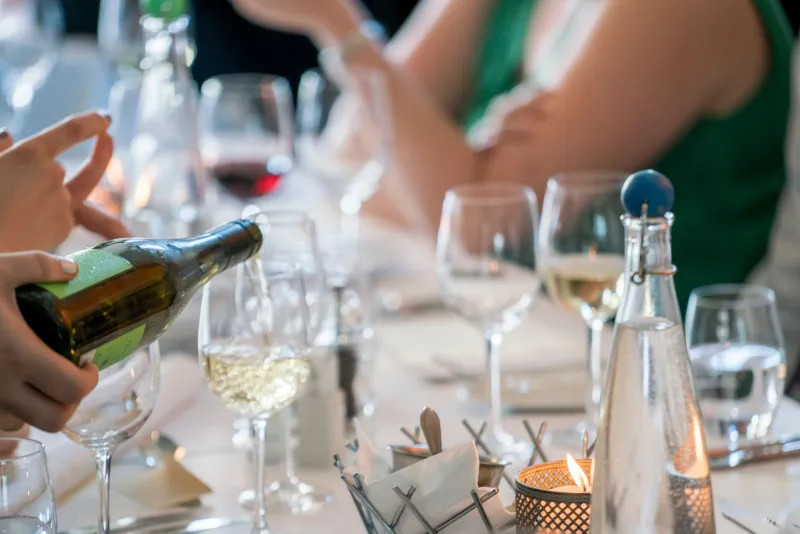
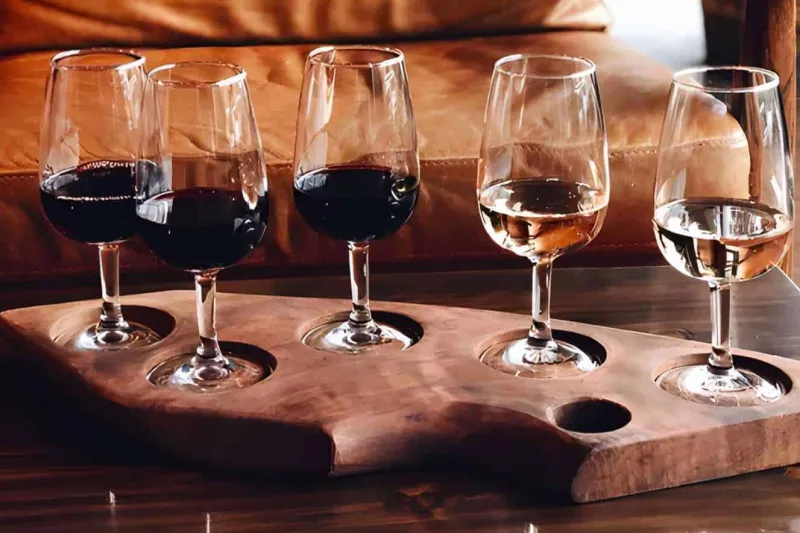
The wine bar's pairing advantage isn't access to rare bottles—it's knowing which everyday wine loves which everyday cheese. Here is a trio that will outperform its price tag at nearly any American grocery store with a decent wine section.
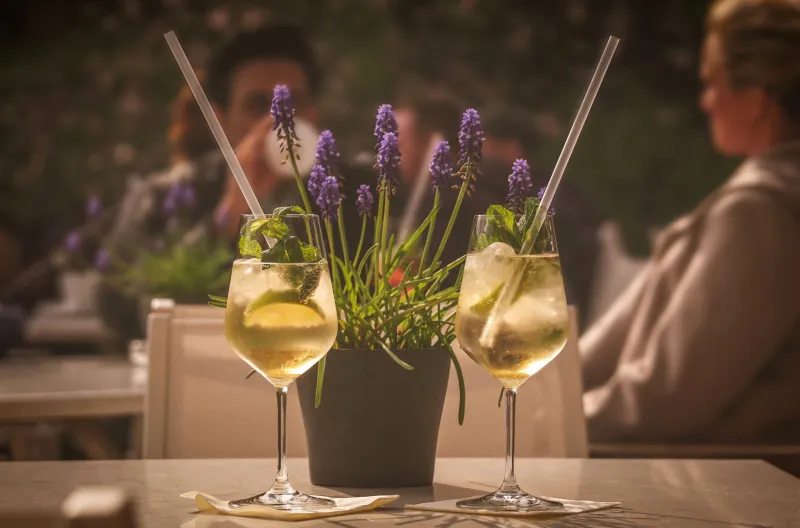
The soft cheese: a creamy brie or triple-cream with a budget sparkling. A California or Spanish cava-style bubbler in the $12–15 range—Freixenet and Gruet are reliably findable—cuts through that richness with acid and lift. This is the pairing that makes guests think you hired someone.
The firm cheese: an aged gouda or manchego with a medium-bodied red. A Rioja crianza or a Washington State merlot in the $13–18 range has enough fruit and gentle tannin to stand beside those nutty, crystalline textures without steamrolling them.
The wild card: a blue cheese with an off-dry white. This is where most home boards go timid. Blue cheese and a slightly sweet white—think an Alsace-style riesling or a Moscato d'Asti under $16—is the boldest, most memorable pairing on the board. The sweetness tames the salt; the salt sharpens the fruit. Do not skip it.
The Shopping List, Organized by Section
Run this as a single store loop, in order:
The cheese counter (or specialty dairy case): One brie-style wheel, one aged gouda or manchego wedge, one blue. Roughly four ounces per person total if there's other food, six if the board is the meal.
The bakery aisle: A baguette or plain water crackers. Read the label; if you can't picture the cracker quietly supporting cheese, put it back.
Produce: Red grapes (yes, they earn their cliché), a firm pear or apple, dried figs or apricots.
Pantry or charcuterie section: One salami-style sausage and one prosciutto or serrano-style sliced meat. Two proteins are plenty.
Condiments: Honey and one fruit paste or good preserves. A small spoonful of honey over the blue cheese is the board's mic-drop moment.
The wine aisle: Your three bottles above. Ask a clerk if you're stuck; most grocery wine staff love this question.
Assembly Without Anxiety
Take the largest wooden surface you own—cutting board, slate, even a clean baking sheet lined with parchment. Wedges and irregular chunks, never fussy slices. Space the cheeses apart like continents, then fill the gaps with meats (folded, draped, loose—stiff meat fans read as catering), fruit, and crackers mounded near their edges. Add honey and preserves in small dishes at the end.
Then rest your hand. A board that looks casually abundant took ten minutes and no ruler. If it looks labored, pull one thing off it.
The Last Word
The cheese board's true function at the bar was never to impress. It exists to slow the table down, to give hands something to do between sips and stories. Build yours for that reason and the show-stealing takes care of itself.