Through Time in a Single Sitting: The Revelations of a Vertical Wine Flight
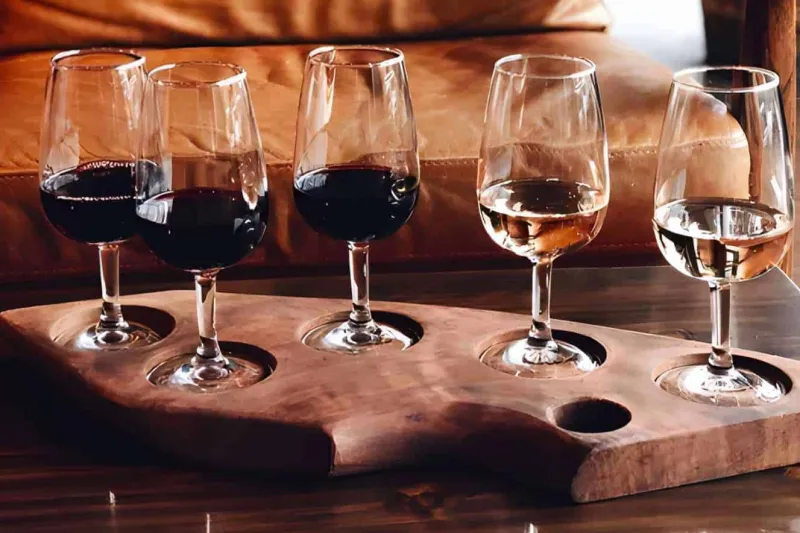
Photo: wine flight multiple glasses tasting bar sommelier, via wineflavorguru.com
Most evenings at a wine bar follow a familiar arc. You arrive, consider the list, select a glass or two that speaks to the mood, and let the evening unfold from there. It is a pleasurable and perfectly sound approach. But there is another way to spend an evening—one that transforms a casual outing into something closer to a master class, without requiring any prior expertise or special preparation. It requires only curiosity and a willingness to order the same wine more than once.
This is the vertical tasting, and it is among the most rewarding and underutilized practices available to the wine bar guest.
What a Vertical Tasting Actually Is
The terminology can sound technical, but the concept is elegantly simple. A vertical tasting involves sampling the same wine—same producer, same vineyard designation, same grape variety—across multiple vintages, arranged in sequence. You might taste a Napa Valley Cabernet Sauvignon from 2015, 2017, 2019, and 2021, for example, moving through time in a single sitting.
This stands in contrast to a horizontal tasting, in which you sample the same vintage from multiple producers—a useful exercise for understanding regional variation, but a different kind of conversation. The vertical is intimate. It is a dialogue with a single voice across several years, and what that voice reveals about itself over time is often surprising.
What You Learn That You Cannot Learn Any Other Way
The most immediate revelation of a vertical tasting is the degree to which vintage conditions shape a wine's character. Two bottles from the same producer, made with the same intention and the same grapes from the same plot of land, can taste dramatically different depending on what the growing season delivered. A cooler year may produce a wine with higher acidity and more restrained fruit. A warmer year brings concentration and earlier approachability. These are not flaws or virtues—they are the honest record of what the land experienced.
For guests who have heard the word "terroir" without ever feeling they fully understood it, a vertical tasting is the most direct path to genuine comprehension. When you taste the same terroir expressing itself across different climatic years, you begin to understand what is consistent—what the land always gives—and what is variable. That distinction is the foundation of serious wine appreciation.
Beyond terroir, a vertical tasting reveals something about aging potential. A 2015 wine sitting beside a 2021 allows you to witness, in real time, what several years of bottle development accomplish. Tannins soften. Primary fruit recedes and secondary complexity—earthiness, dried herbs, leather, dried fruit—begins to emerge. Some guests discover, to their surprise, that they prefer the younger wine's vibrancy. Others find that the older bottle is where the real conversation begins. Both responses are valid, and both tell you something important about your own preferences.
How to Request a Vertical at the Bar
Not every wine bar maintains the inventory to support a vertical tasting, but establishments with serious cellar programs often have more depth than the list suggests. The best approach is to ask your sommelier or server directly: "Do you have multiple vintages of anything I might taste vertically?" This opens a conversation that most wine professionals find genuinely engaging, because it signals that you are interested in something beyond the obvious.
At Annabel's, guests who express interest in exploring a producer across vintages will find our team eager to assist. When requesting a vertical flight, it helps to have a general direction in mind—a region you're curious about, a variety you've been exploring, or a price range that feels comfortable. From there, the sommelier can identify what's available and structure the flight in a way that makes the progression legible.
Younger to older is the conventional sequence, and it is conventional for good reason: it allows you to experience the wine's arc as it was intended to unfold, moving from the present toward the past.
The Regions That Tell the Most Compelling Stories
Not every wine benefits equally from vertical exploration. Wines designed for immediate consumption—light, aromatic whites meant to be drunk within a year or two—will show less dramatic evolution across vintages than wines built for aging. For the most revealing vertical experiences, the following regions and styles offer particularly compelling stories.
Napa Valley Cabernet Sauvignon is perhaps the most accessible vertical subject for American guests, given its cultural familiarity and the region's well-documented vintage variation. The contrast between a cool-year bottling and a warmer one can be striking.
Burgundy, both red and white, rewards vertical exploration with extraordinary nuance. The region's Pinot Noir and Chardonnay are among the most site-sensitive wines in the world, making vintage differences especially pronounced.
Barolo and Barbaresco, from Piedmont in northern Italy, are built for aging and change dramatically across their first ten to fifteen years. A vertical of these wines is a lesson in patience and the rewards it delivers.
Rioja Reserva and Gran Reserva, from Spain, often offer excellent value for vertical exploration, as the region's extended aging requirements mean that older vintages are frequently available at reasonable prices.
The Evening Transforms
What distinguishes a vertical tasting from an ordinary evening of wine drinking is the shift in how you engage with your glass. Each pour becomes a reference point rather than a standalone experience. You find yourself reaching back to the previous glass to compare, recalibrating your perception, noticing what the wine has given up over the years and what it has gained. The conversation at the bar changes, too—it becomes more specific, more curious, more genuinely collaborative.
Guests who have never considered themselves particularly knowledgeable about wine consistently report that a vertical tasting is the experience that made them feel, for the first time, that they were beginning to understand something real. Not because the information is difficult, but because the format makes the information tangible. You are not reading about vintage variation. You are tasting it.
That distinction—between knowing and tasting—is precisely what the wine bar, at its best, exists to provide.