The Quietest Night Wins: An Argument for the Unplanned Tuesday Glass

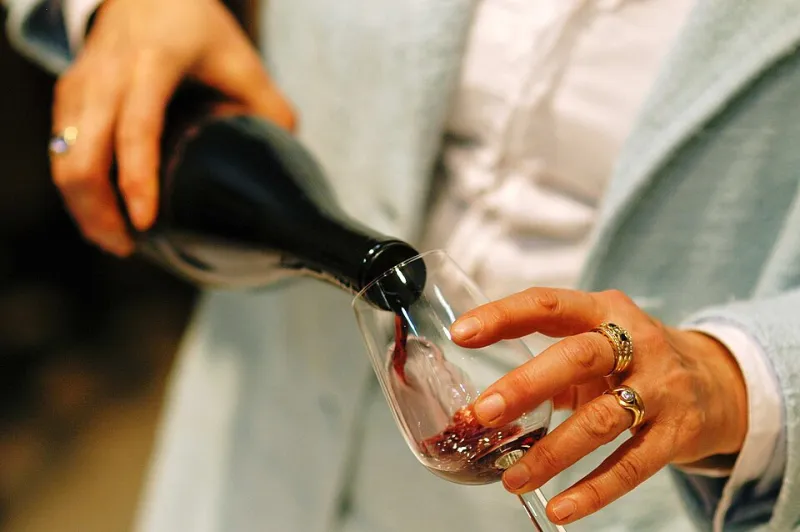
Photo by Photo by Bangyu Wang on Unsplash on Unsplash
Every city in America has its Friday night, and every Friday night looks roughly the same: the reservation made eleven days out, the room at full volume by eight o'clock, the server moving at a pace that permits a greeting but not a conversation. It is a good night. It is also, increasingly, a production.
Meanwhile, on a Tuesday in the same room, six people are seated at a bar built for fourteen. The music is audible but not insistent. The bartender has time to open a bottle that is not on the by-the-glass list and pour a taste for someone who asked. Two guests who have never met are discussing a wine region neither has visited. The evening has no plan, and that is the entire reason it works.
The case for the midweek glass is not a case against Friday. It is a case for recognizing that the qualities we claim to want from a night out — unhurried service, real conversation, a room that feels like a room rather than a crowd — are quietly available three days earlier and at a fraction of the effort.
What a Quieter Room Actually Gives You
Atmosphere is not decoration. It is a set of conditions, and occupancy is one of the most powerful of them. A full room produces energy and, unavoidably, noise. A half-full room produces something else: the sense of a private club that happens to be open to the public.
Consider what changes on a Tuesday.
- The seat is yours for as long as you want it. No second turn, no hovering, no internal clock.
- The service is conversational. A server with eleven guests can talk about soil and vintage. A server with eighty cannot.
- The good bottles are still there. Allocated wines, the last of a small-production white, the odd magnum — these are Friday casualties.
- The room's design finally reads. The materials, the lighting, the acoustics were chosen for a certain intimacy. At capacity, that design is invisible. On a quiet night, it does its work.
The last point is not incidental. A wine bar is built with attention to how sound behaves, how light falls on glass, how far apart two stools should sit. Those decisions are made for a room of people having a conversation. Tuesday is the night the room gets to be what its architects intended.
The Case for Breaking the Week
There is a structural argument here, and it is about the shape of the American workweek rather than about wine.
We have organized the week so that pleasure is deferred to its end. Five days of accumulation, then a compressed Saturday of errands and errands of a different sort, and a Sunday that belongs half to rest and half to dread. Friday night carries the weight of everything the previous week failed to provide, which is why it so often disappoints in small ways: the reservation is rushed, the table turns, the conversation is loud enough to be effortful.
A single glass on a Tuesday distributes that weight differently. It gives the week a hinge. Two days of work, an evening of genuine respite, two more days, and the weekend arrives with less to prove. Regulars at Annabel's describe the practice in nearly identical terms: it is not a celebration, and that is exactly what makes it restorative.
There is also a practical honesty to midweek drinking. A glass and a plate, then home. Fewer drinks because the next morning is a working one, which means the wine is chosen for pleasure rather than volume. The by-the-glass pours are often the smartest value on the list. The pace is set by the guest, not the room.
A Modest Ritual
What would a midweek habit look like if it were taken seriously?
It would not require a reservation. It would begin around six and end before nine. It would involve one glass of something unfamiliar and one plate of something simple. It would last as long as it was good and not one minute longer. It would, ideally, involve the same seat, because the pleasure of a ritual lies partly in its repetition — the bartender who remembers the grape you liked, the small nod of recognition that turns a customer into a regular.
Restaurants have understood this instinct for years; the neighborhood bar has built an entire culture on it. The wine bar, which sits between the two, is only now catching up to a truth its best regulars discovered quietly: the midweek room is where the relationship with a place is actually formed.
Not an Argument Against the Weekend
To be clear, Friday has its uses. A room at full volume is a fine thing when the occasion calls for it, and the collective energy of a crowded bar on the first cool evening of November is not to be dismissed. Celebration needs a crowd.
But celebration is not the only reason to go out, and it is not the reason most Americans say they go out. They go out to talk, to slow down, to sit somewhere that is not home or work, and to have one good thing at the end of an ordinary day. Those needs are poorly served by a night engineered for maximum occasion.
The best night in a wine bar, in our experience, is the one with nothing in the calendar. It is the Tuesday nobody planned, the glass nobody photographed, the conversation that drifted because there was time for it to drift.
Go on a Tuesday. Sit at the bar. Order the wine you cannot pronounce. Stay until the room stops being interesting, then go home.
The weekend will still be there, and it will ask less of you for having waited.