The Stranger Two Seats Over and the Conversation Neither of You Planned to Have
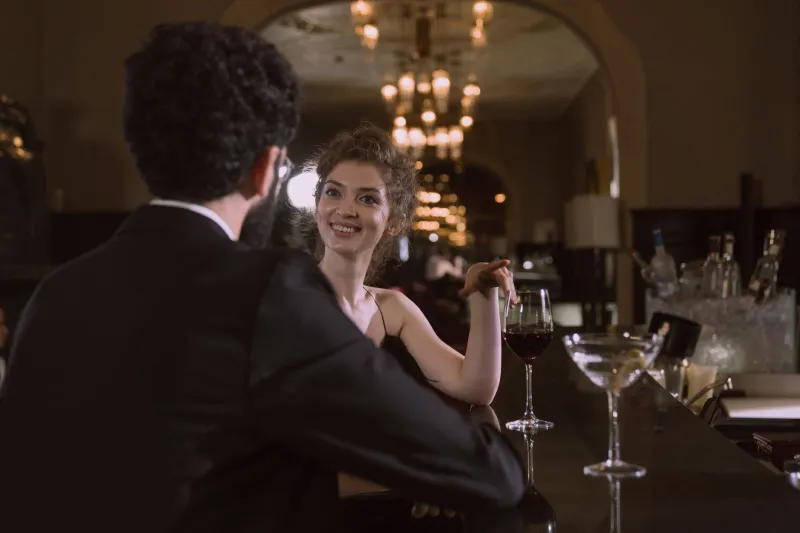
It begins, almost always, with something small. A glance at someone else's glass. A comment made to no one in particular about the label on a bottle the server is carrying past. A shared look of mild bewilderment when the lights dim slightly and the room shifts into a different register. These are not the opening moves of a deliberate social encounter. They are the accidental first notes of something that wine bars, more than any other kind of venue, seem uniquely capable of composing.
The Architecture of Accidental Connection
Consider what a wine bar actually is, spatially. It is a room designed to encourage proximity without demanding it. The bar itself is the most obvious expression of this—a long, shared surface where strangers sit within arm's reach of one another, each ostensibly absorbed in their own glass, their own companion, their own evening. And yet the bar does not permit the kind of sealed-off isolation that a table for two in a corner affords. It is semi-public by design, a threshold space between solitude and society.
This is not accidental. The best wine bars understand that intimacy and openness must coexist in their physical layout. A room that is too cavernous makes connection feel effortful. A room that is too close becomes suffocating. The right configuration—a bar with a moderate run of seats, small tables positioned near enough to the bar to feel connected to its energy—creates what might be called a social pressure that is gentle rather than coercive.
At Annabel's Wine Bar, the seating arrangement reflects this philosophy. The bar draws guests who arrive alone or in pairs and want to feel embedded in the life of the room without being swallowed by it. The tables nearby offer privacy while remaining permeable to the ambient energy of the evening. It is a layout that says, without saying anything at all: you are welcome to stay in your own world, but the door to another one is open.
What Wine Does That a Cocktail Cannot
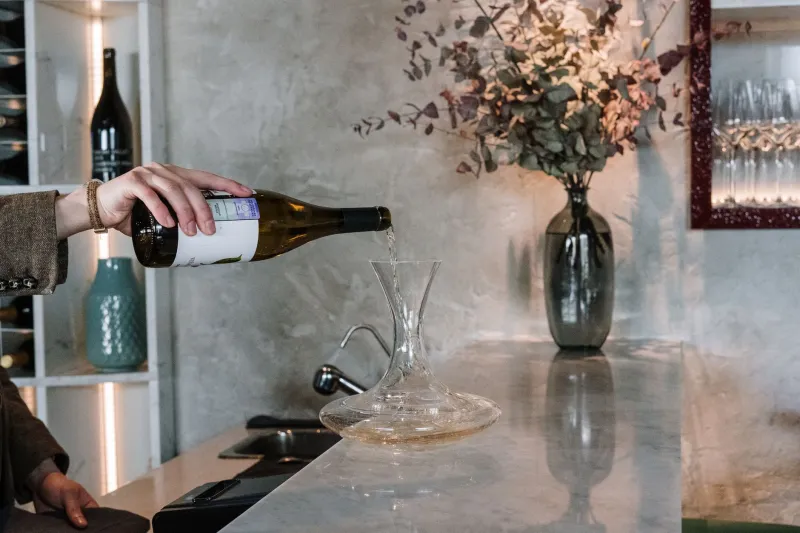
The specific role of wine in facilitating these moments deserves more credit than it typically receives. Wine is, by its nature, a subject. It has a history, a geography, a vocabulary, and an endless supply of opinions attached to it. When someone orders a glass of something unusual—an Assyrtiko from Santorini, a Grüner Veltliner from Austria, a Pét-Nat from a small domestic producer—that choice becomes a kind of opening statement. It is, consciously or not, an invitation.
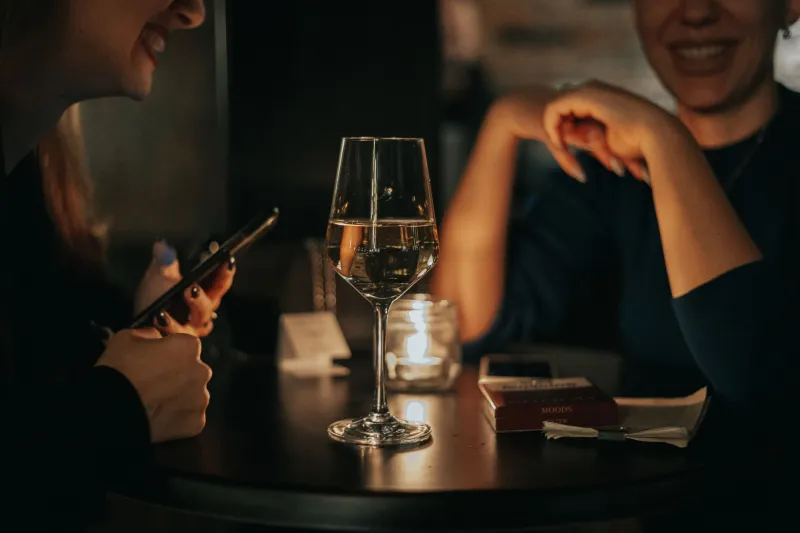
The person two seats over who notices the color of your glass, or catches the name of the producer when the server announces it, suddenly has something to say. Not something they rehearsed or planned, but something genuine—a question, a recognition, a small piece of shared knowledge or shared curiosity. Wine gives strangers a subject that is both specific and expansive, one that can sustain a conversation for an entire evening without ever exhausting itself.
This is different from what happens at a cocktail bar, where the drink is often the end of the conversation rather than the beginning. A beautifully constructed Negroni is a complete thing. It does not invite the same kind of open-ended inquiry. Wine, with its regional specificity and vintage variation and producer lore, is perpetually unfinished. There is always more to say, and that incompleteness is, paradoxically, what makes it such effective social glue.
The Moments That Actually Do It
Those who have experienced these exchanges—and most regular wine bar visitors have, whether or not they have thought to name them—tend to describe them in terms of specific, unremarkable triggers. The server who pauses to explain a wine's provenance and inadvertently draws two neighboring guests into the same explanation. The couple who orders a bottle and, finding themselves unable to finish it, offers the remaining pour to the person sitting alone beside them. The moment when a shared small plate arrives and the logistics of the bar require a brief, logistically necessary acknowledgment between strangers that somehow turns into something else.
These are not grand gestures. They are the micro-events of an ordinary evening, distinguished from their equivalents in other settings only by the fact that wine bars seem to concentrate them. The combination of proximity, a shared subject, a moderate pace of service, and the particular social permission that a glass of wine confers—the sense that one is here to enjoy rather than to transact—creates conditions that are, if not precisely engineered for connection, at least hospitable to it in a way that few other environments manage.
Why Americans Are Rediscovering This
There is something quietly countercultural about the wine bar's capacity for spontaneous human exchange in a moment when most social life has migrated to screens. The American dining landscape has, in recent years, become increasingly optimized for efficiency—the quick reservation, the contactless order, the table turned in ninety minutes. Wine bars, by contrast, tend to resist this optimization. They are premised on lingering, on the second glass, on the evening that takes its shape from the room rather than from a schedule.
This resistance creates space. And in that space, something that looks almost old-fashioned—two strangers discovering, over a shared subject, that they have something in common—becomes possible again.
The Evening You Didn't Plan for
Not every visit to Annabel's will produce this kind of encounter. Many evenings are simply what they appear to be: a quiet glass, a good meal, a comfortable conclusion. But the possibility of the unplanned conversation is always present, woven into the fabric of the room, waiting for the right combination of a curious glance, an interesting bottle, and two people who happened to arrive at the same bar on the same evening with enough openness to let the night surprise them.
The stranger two seats over is not a distraction from your evening. On the best nights, they are the reason you remember it.