Your Bottle, Their Table: Navigating Corkage With Grace
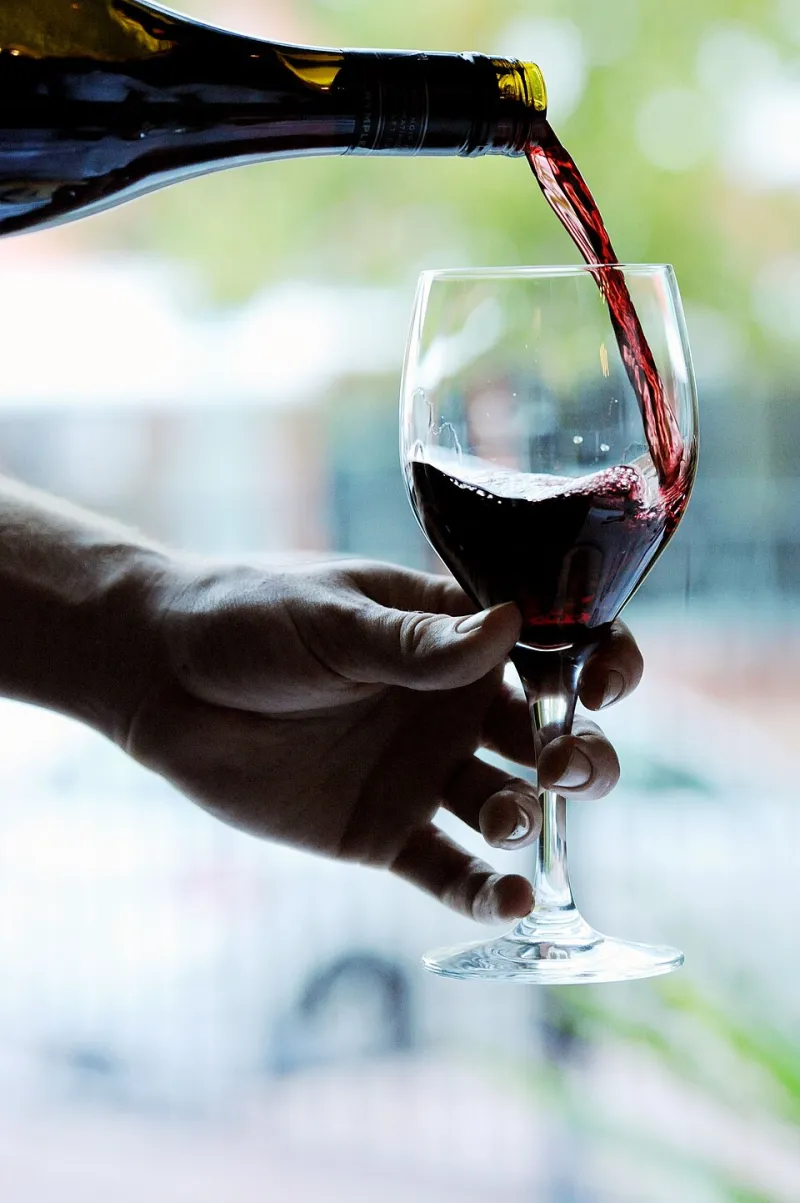
Photo: Bhullargraphic, CC BY-SA 4.0, via Wikimedia Commons
Few gestures in American dining require as much arithmetic and as much tact as arriving at a wine bar with a bottle of your own. Corkage — the fee a licensed establishment charges to open and serve a bottle you have brought — sits at the intersection of value, etiquette, and hospitality. Handled well, it is a courtesy exchanged between two parties who want the same thing: a good bottle served properly. Handled poorly, it becomes the sort of small grievance a guest remembers for years and a room remembers for a week.
What follows is a practical account of how corkage works in the United States today, when it is genuinely the smartest move available, and how to conduct the conversation so that everyone at the table — staff included — comes out ahead.
What the Fee Is Actually Buying
Corkage is not a tax on thrift, and it is not a loophole. It is a service charge, and it covers more ground than most guests realize: the stemware, the washing of that stemware, the ice bucket, the decanter, the attention of a server who knows how to open a mature bottle without disturbing its sediment, and the license under which the room is permitted to serve alcohol at all.
A fee of $25 to $50 per bottle is common in most American cities. In fine-dining rooms and in markets where rent runs high, $75 is not unusual. A smaller number of establishments waive the charge when a guest also purchases a bottle from the list, and a smaller number still decline corkage altogether. None of these positions is unreasonable; they reflect different business models and different rooms.
The Legal Layer, Briefly
Licensing varies by state, and the decision to permit corkage generally belongs to the establishment rather than to the guest. A few states restrict the practice outright, and municipal ordinances can add conditions on top of state law. The practical implication is simple: never assume. A wine bar that declines your bottle is not being ungenerous — it is operating within its license and its margins.
This matters for tone as much as for law. Arriving with a bottle and a statute in hand is a reliable way to begin an evening badly.
Doing the Arithmetic Before You Pack the Car
Consider a bottle purchased at retail for $55. Corkage runs $35. The total is $90. The same wine on a restaurant list, at a typical markup, might appear at $110 to $140. The savings are real but rarely dramatic, and they evaporate entirely if the bottle disappoints.
The calculation changes when the bottle cannot be bought off any list: a birth-year wine, a bottle carried home from a trip, a producer who sells only at the cellar door, a library release a friend set aside for you. In those cases corkage is not a discount — it is the only path to the bottle at all.
A useful rule of thumb: bring your own when the bottle is irreplaceable. Buy from the list when the bottle is merely cheaper.
How to Ask, and When
Call in the afternoon, not at seven on a Friday. The person who answers will have time to check the policy and to think about whether the evening's reservations leave room for a special bottle.
Three questions cover nearly everything:
- Do you allow guests to bring wine, and is there a charge per bottle?
- Is there a limit on the number of bottles, or any restriction on styles?
- Do you prefer that we also order from the list?
Then offer the context: party size, the occasion, and whether you intend to dine fully. A host who hears "we are celebrating my father's seventieth and we would like to open a bottle he cellared for thirty years" is being handed the information needed to say yes warmly, rather than cautiously.
What to Expect Once You Are Seated
The server will take the bottle, confirm it, open it, and pour. Let them. Professional service on a brought bottle is precisely what the fee purchases, and declining it can read as a slight.
Offer a small taste to the person who opened it. This is a gesture of thanks rather than an obligation, and it is nearly always welcomed. Should the bottle be flawed — corked, tired, heat-damaged — say so quietly and immediately. The house did not sell it to you, but a good room will still help you salvage the evening.
Tipping and Thanking
Tip on the full check, corkage included, and tip as though you had bought a comparable bottle from the list. Where corkage was $30 and the bottle was worth $90, an additional $20 to $25 is appropriate and remembered. A handwritten note to the manager the following week costs nothing and carries further than most guests imagine.
When to Leave the Bottle at Home
There are evenings when the bottle in the trunk is the wrong idea: a large group, a first visit, a wine that appears on the list, an evening when you want pairing guidance from someone who knows the kitchen. The list is not the obstacle to a good night out. More often, it is the shortcut to one.
A Closing Thought
Corkage at its best is a conversation between a guest who cares about a particular bottle and a house that cares about how it is served. Approached that way, it stops looking like a workaround and starts looking like what it is: two parties investing in the same hour, and both of them better off for it.