The Person Behind the List: How to Actually Talk to Your Sommelier
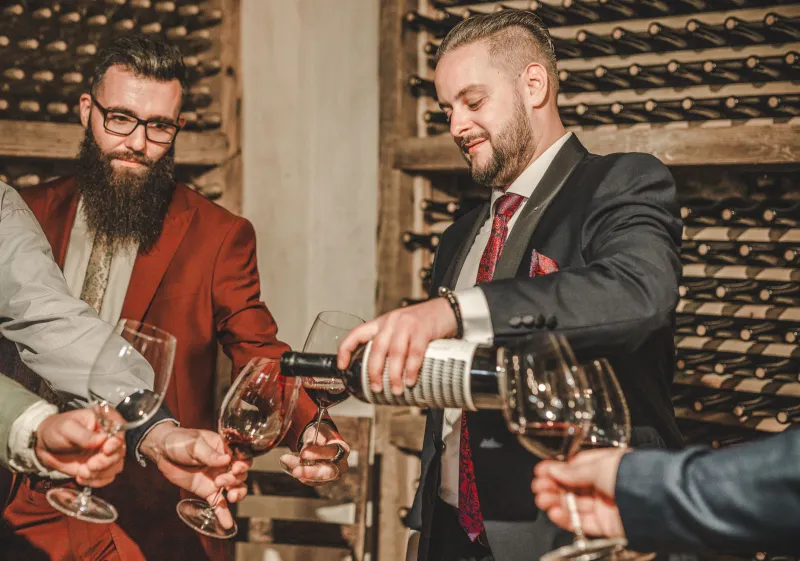
There is a particular kind of silence that falls over a table when the wine list arrives. Guests lean in, scan the pages with varying degrees of confidence, and — more often than not — settle on something familiar or something safely mid-priced, all without ever uttering a word to the one person in the room who could have made the entire experience remarkable.
The sommelier is, by nearly every measure, the most underused resource at any wine bar in America. Not because guests are indifferent, but because a quiet, persistent intimidation tends to win out over curiosity. That is a loss worth correcting.
The Myth of the Unapproachable Expert
Sommeliers have earned something of an unfair reputation in popular culture — the furrowed brow, the knowing glance, the barely concealed judgment when a guest mispronounces a grape variety. In reality, the professionals who choose this career are, almost universally, driven by a genuine desire to share what they love.
A sommelier who has spent years studying appellations, vintages, and producers did not do so to hoard that knowledge. They did so because wine is endlessly fascinating, and few things in their professional life compare to the moment a guest tries something unexpected and lights up with recognition. That moment, for a sommelier, is the whole point.
Understanding this reframes the interaction entirely. You are not interrupting an expert. You are giving one the opportunity to do exactly what they came to work to do.
What You Actually Have Permission to Say
The most common barrier to engaging a sommelier is the fear of asking something that sounds uninformed. Guests worry that admitting they do not know the difference between a Grüner Veltliner and a Vermentino will mark them as unserious, or worse, waste someone's time.
It will not. In fact, those are precisely the questions that open the most interesting conversations.
Consider a few prompts that work beautifully in practice:
"I usually drink Cabernet, but I want to try something I've never had before. What would surprise me?" This tells the sommelier exactly where you are starting from and gives them genuine creative latitude. The answer will almost certainly be more interesting than anything you would have chosen independently.
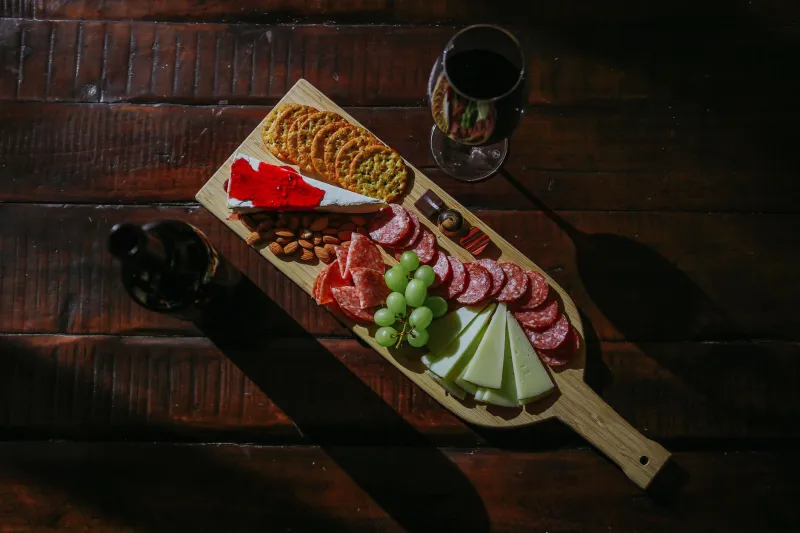
"We're having the charcuterie board and the mushroom flatbread. What on your by-the-glass list would work across both?" Food context is enormously helpful. A sommelier thinking about a pairing problem is a sommelier fully engaged, and the result will be a recommendation tailored precisely to your table.
"What's something on this list that doesn't get ordered enough?" This is, arguably, the single best question you can ask at any wine bar. Sommeliers often curate lists with bottles they are genuinely excited about, and some of those bottles sit quietly because no one thinks to ask. You are essentially inviting them to show you their favorite corner of the cellar.
"I have about twenty-five dollars to spend on a glass. What's the most interesting thing in that range?" Stating a budget directly is not embarrassing — it is practical and respectful of everyone's time. A skilled sommelier will work within any range without judgment and will often find something genuinely surprising at a modest price point.
The Questions That Feel 'Weird' Are Usually the Best Ones
Beyond the practical prompts, there is an entire category of questions that guests suppress because they fear they sound odd. These, it turns out, tend to produce the most memorable recommendations.
"I want something that tastes like a rainy afternoon." Evocative? Absolutely. Useful? More than you might expect. Sommeliers are accustomed to translating sensory impressions and emotional associations into actual bottles. A guest who describes a mood or a feeling gives a sommelier something vivid to work with.
"What are you personally excited about right now?" Personal enthusiasm is contagious, and a sommelier who is currently fascinated by natural wines from the Jura, or by the resurgence of American Chenin Blanc, will bring an energy to that recommendation that no menu description can replicate.
"Is there anything on this list I should absolutely avoid tonight given what I'm eating?" This is a question of constraint rather than preference, and it is surprisingly clarifying. Knowing what not to order is sometimes as valuable as knowing what to order.
Treating the Sommelier as a Collaborator, Not an Authority
The most productive sommelier interactions share a common quality: they feel like conversations rather than consultations. The guest is not submitting to an authority figure; they are working alongside someone with specialized knowledge toward a shared goal — a better evening.
This means offering information freely. What you have enjoyed before. What you distinctly did not enjoy. Whether you are celebrating something, or simply unwinding after a difficult week. Whether you prefer structure or softness in a wine, something bright and lively or something slow and contemplative. All of this is useful data, and none of it is too personal to share.
A sommelier who knows that you had a Barolo on your honeymoon and have been chasing that memory ever since is equipped to do something genuinely meaningful. One who knows only that you are seated at table seven and have opened the list to page four is working largely in the dark.
A Note on Timing and Atmosphere
One practical consideration worth naming: the sommelier's availability will vary across the course of an evening. Early in the night, before the room fills, is often the ideal moment for a longer, more exploratory conversation. Later, when every table is occupied and the pace quickens, a more focused question — one that respects the rhythm of the room — will serve everyone better.
At Annabel's, the approach has always been that no question about wine is too small to deserve a thoughtful answer. That philosophy extends to every stage of the evening, whether you are deciding on an opening glass or considering a final pour to close the night.
The Conversation Worth Having
The wine list at any serious wine bar represents months of careful curation — relationships with importers, deliberate decisions about regions and producers, a considered vision of what a guest's evening might become. The sommelier is the living interpreter of that vision.
To sit down, point quietly at the second option from the bottom, and never once engage with that person is to leave most of the evening on the table.
Ask the question that feels too simple. Describe the mood you are in. Tell them what you loved and what fell flat. Start the conversation.
What follows will almost certainly be worth staying for.