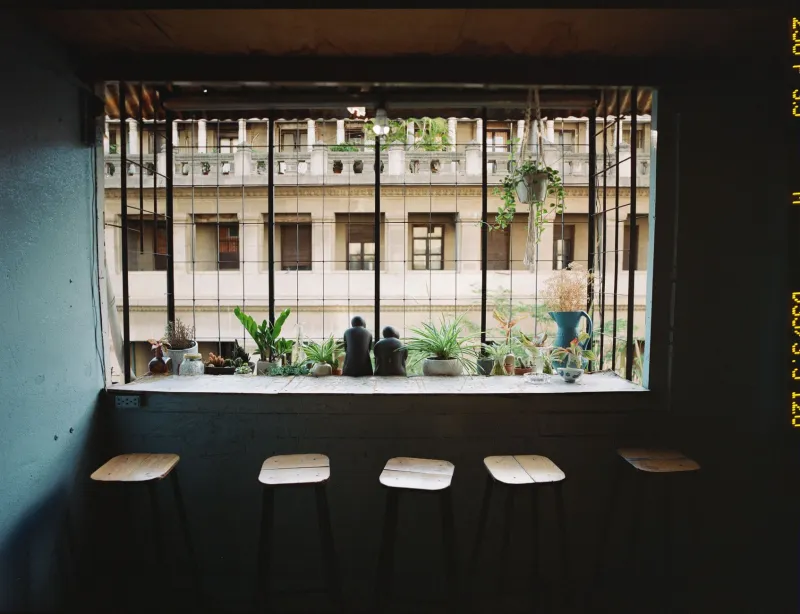
Pull Up a Stool: The Compelling Case for Claiming Your Spot at the Bar
The Table Has Its Charms — But the Bar Has Something Better
Walking into a wine bar, most guests instinctively scan the room for an open table. It feels natural. Tables suggest occasion, privacy, a certain deliberate quality to the evening. And yet, the regulars — the ones who return week after week and seem to know something the rest of the room does not — are almost always perched at the bar.
This is not coincidence. It is preference born of experience.
The bar seat is, in the considered opinion of those who have spent many evenings in wine bars across the country, the finest position in the house. Not because it is the most comfortable, necessarily, nor because it offers the most space. It earns its distinction through proximity — to the staff, to the bottles, to the living, breathing energy that makes a wine bar worth visiting in the first place.
You Are Closer to the Story Than You Realize
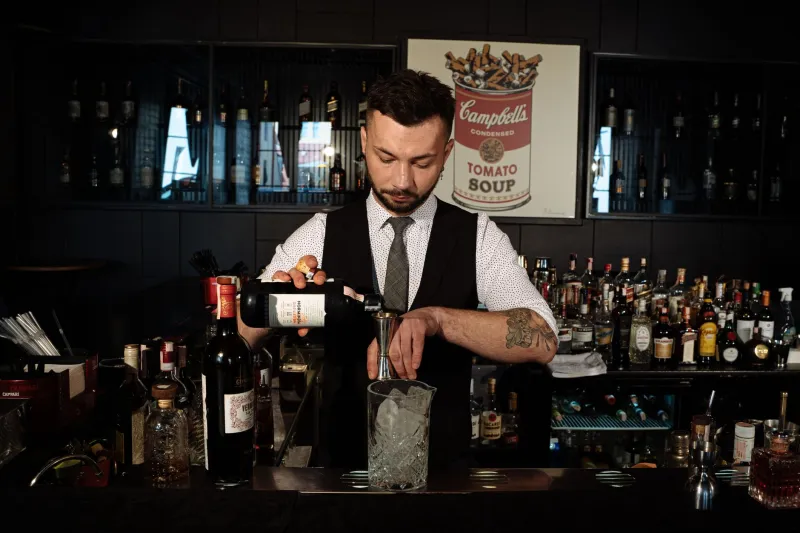
Consider what is happening behind that bar on any given evening. A sommelier or bartender is making dozens of small decisions per hour: which bottle to open next for the by-the-glass program, how to introduce a new arrival from an unfamiliar producer, whether the Grüner Veltliner or the Albariño is better suited to the evening's mood. When you sit at the bar, you are not simply a guest waiting for service. You are a witness to the curation process itself.
This vantage point is genuinely educational. You will hear the staff talk through a wine with another guest, and you will absorb that knowledge without having asked for it. You will watch a pour happen — the tilt of the bottle, the brief pause before service, the moment the glass is set down with intention — and you will begin to understand that each glass represents a small act of hospitality that deserves your full attention.
At a table, that context is invisible. At the bar, it is the entire show.
How to Engage Without Overstepping
One of the reasons guests shy away from bar seating is a concern about engagement. Sitting at a table feels self-contained; sitting at a bar can feel like an implicit agreement to interact, and not everyone arrives at a wine bar seeking conversation.
The truth is more nuanced. A good bar staff reads energy the way a skilled sommelier reads a wine — with attention and without assumption. If you settle in with a book or lean into quiet conversation with your companion, that signal will be respected. But if you are open to it, the bar offers a kind of low-pressure sociability that is genuinely rare.
The most effective way to engage is simply to be curious and direct. When the bartender approaches, rather than defaulting to "What do you recommend?" — a question that is too broad to answer well — try something more specific. "I've been enjoying Spanish whites lately. What's interesting on your list right now?" or "I'd like something with a bit of texture. What's pouring well tonight?" These are questions that invite a real answer, and they signal that you are a guest worth talking to.
From there, let the conversation breathe. Ask about a bottle you can see on the shelf. Inquire about where a particular producer is located. You are not conducting an interview; you are having a conversation. The best bar staff at any wine establishment will meet that openness with genuine enthusiasm.
Catching Pours as They Happen
One of the most underappreciated advantages of bar seating is the ability to observe the by-the-glass program as it evolves throughout the evening. Wine bars frequently open bottles throughout the night — sometimes because a guest has ordered something, sometimes because the staff wants to introduce a new option. When you are seated at the bar, you are often the first to know.
Do not hesitate to ask about a bottle the moment you see it opened. "What just came out?" is a perfectly reasonable question, and it frequently leads to one of the most interesting pours of the evening — sometimes offered as a taste before a full glass is committed to. This kind of spontaneous discovery is the hallmark of a great wine bar experience, and it is almost exclusively available to those sitting close enough to notice.
Similarly, if you observe a bottle being described to another guest and find the description compelling, it is entirely appropriate to ask for a taste or a glass yourself. The bar is a communal space, and its culture is built on shared enthusiasm for what is in the glass.
Reading the Room From the Best Angle
Beyond the wine itself, the bar seat offers something that a tucked-away table does not: perspective. From a well-positioned bar stool, you can observe the entire room — the rhythm of service, the mood of the crowd, the way the evening is unfolding. This may sound like a minor benefit, but it contributes meaningfully to the sense of being fully present in a space.
There is a particular pleasure in watching a wine bar operate at its best — servers moving with quiet efficiency, guests leaning in over their glasses, the low hum of conversation that signals a room full of people choosing, however briefly, to slow down. The bar seat places you at the center of that experience rather than at its edges.
For solo guests especially, this vantage point transforms what might otherwise feel like a solitary evening into something genuinely social, even without a single word exchanged with a stranger.
A Small Shift With a Significant Reward
The next time you visit Annabel's — or any wine bar that matters to you — consider arriving a few minutes before your usual time, settling onto a stool at the bar, and simply allowing the evening to unfold from that position. Order something you have not tried before. Ask one question you would not normally ask. Stay long enough to see what gets opened next.
The bar seat is not for every occasion, and it is not for every guest on every evening. But for those willing to step slightly outside their comfort zone, it offers a version of the wine bar experience that is richer, more immediate, and considerably more memorable than what a table alone can provide.
Some of the best evenings begin not with a reservation, but with a stool pulled up to a well-stocked bar and a willingness to see what the night brings.