Small Plates, Big Impact: How Thoughtful Bar Snacks Quietly Elevate Every Pour
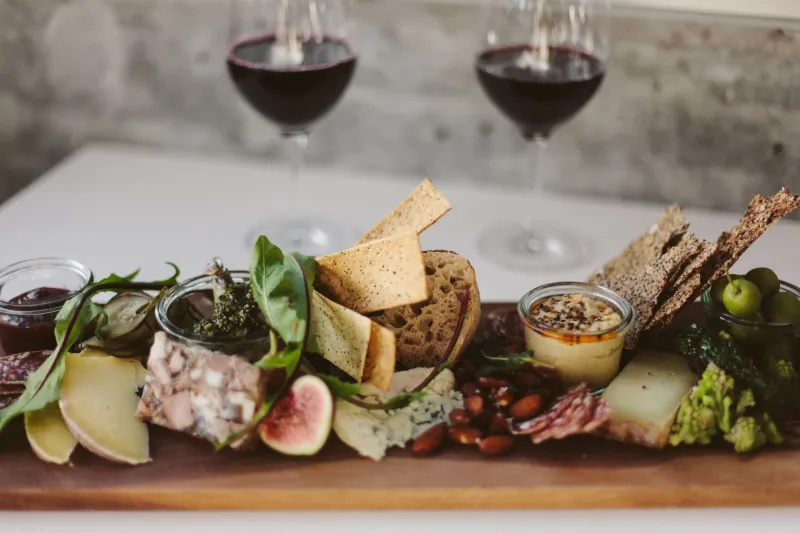
There is a moment that occurs at nearly every wine bar visit — one so routine it almost escapes notice. A small dish arrives alongside your first glass. Perhaps a handful of warm, salted almonds. Perhaps a few glistening olives flecked with herbs and orange peel. You reach for one almost automatically, barely registering its presence before your attention returns to the wine list or the conversation across the table.
That moment, it turns out, matters considerably more than most guests realize.
The bar snack — that quiet, unassuming offering that precedes the entrée and often arrives without ceremony or explanation — is one of the most deliberately constructed elements of a serious wine bar experience. At establishments that take their craft seriously, nothing on the table is accidental. The snack that lands beside your glass has been selected with the same care applied to the wine list itself. Understanding why can change the way you experience everything that follows.
The Palate as an Instrument That Requires Tuning
Before a glass of wine can be fully appreciated, the palate benefits from a kind of preparation. This is not a fringe theory among sommeliers — it is a working principle that shapes how thoughtful wine bars approach their opening offerings.
The mouth carries residual flavors from whatever came before: a cup of coffee consumed on the drive over, a piece of gum hastily discarded in the parking lot, the lingering sweetness of an afternoon snack. These traces, subtle as they may seem, can mute or distort the initial impression of even an exceptional wine.
A well-chosen bar snack acts as a palate reset. Something lightly salted and neutral in fat — a plain cracker, a few marcona almonds, a small piece of warm bread with good olive oil — gently cleanses the mouth without overwhelming it. The effect is not dramatic. It is quiet and cumulative. But the difference between tasting a crisp Albariño with a fresh palate versus a distracted one is, for those paying attention, genuinely significant.
Why Certain Snacks Pair With Certain Styles
Beyond the general reset function, experienced wine bars engineer their snack offerings to complement specific categories of wine. This is where the bar snack transitions from background element to active participant in the tasting experience.
Consider marcona almonds, that Spanish staple increasingly common on American wine bar menus. Their mild sweetness, gentle bitterness, and buttery fat content make them an ideal companion to oxidative wines — think fino Sherry, aged white Burgundy, or a nutty Jura Savagnin. The shared aromatic vocabulary between the nut and the wine creates a kind of resonance that neither could achieve independently.
Marinated olives, by contrast, tend to perform best alongside wines with higher acidity and a savory, umami-driven character. A bowl of Castelvetrano olives dressed with fennel and chili is not simply a decorative gesture — it primes the palate for a Vermentino or a Sicilian Nerello in a way that amplifies the wine's herbal and mineral qualities rather than competing with them.
Spiced nuts introduce warmth and complexity, making them natural companions to wines with a touch of residual sweetness or notable spice — an off-dry Gewürztraminer, a peppery Northern Rhône Syrah, or even a lightly chilled Lambrusco. The interplay between the spice of the nut and the spice of the wine can produce a sensation that borders on the revelatory.
Warm bread, perhaps the most democratic of bar snacks, deserves its own consideration. A good piece of bread — crusty, slightly chewy, served at the right temperature — is extraordinarily versatile. It softens tannins, provides a neutral canvas between pours, and, when accompanied by quality olive oil or cultured butter, adds a richness that makes medium-bodied reds feel more generous and textured whites feel more structured.
The Underrated Ritual of Paying Attention
The challenge, for most guests, is one of intention. Bar snacks arrive so casually, so quietly, that it is easy to consume them on autopilot — reaching for an almond while scrolling a phone, finishing the olives before the first glass has even been poured. When that happens, the snack's purpose is lost entirely.
The more rewarding approach is to engage with the snack as a deliberate part of the experience. Take a bite before your first sip. Notice how your palate responds. Then taste the wine. The contrast — or the harmony — between the two will often reveal something about the wine that a cold, unprepared palate might have missed entirely.
If you are curious about why a particular snack has been offered alongside a specific wine or flight, ask. A knowledgeable server or sommelier will almost always have an answer worth hearing. These are not arbitrary decisions at a wine bar that takes its craft seriously, and the conversation that follows can be one of the more illuminating exchanges of the evening.
What to Look for When You Sit Down
Not every wine bar approaches its snack program with equal deliberation, and it is worth knowing the difference. Establishments that have thought carefully about this element tend to offer snacks that vary by season, by the composition of the by-the-glass list, or by the style of the evening — a lighter, more citrus-forward offering in summer months, something warmer and richer as the menu shifts toward heavier pours in autumn and winter.
Pay attention to texture as well as flavor. A snack that is entirely soft and yielding does little to stimulate the palate. The best bar snacks tend to offer some contrast — a crunch, a slight chew, a burst of brine — that keeps the mouth alert and receptive.
Finally, notice the timing. A snack that arrives too early, before the wine, can set the palate in a direction that the first pour then has to work against. A snack that arrives too late, after the first glass is nearly finished, has missed its moment entirely. The ideal delivery is simultaneous — snack and glass arriving together, each prepared to inform the other.
The Humble Hero of the Wine Bar Table
There is something quietly elegant about the bar snack done well. It asks for no acknowledgment. It does not announce itself or demand appreciation. It simply does its work — resetting, priming, complementing, extending — and then disappears, leaving the wine a little more legible and the evening a little more complete.
At Annabel's, we believe that the details no one notices are often the ones that matter most. The right snack at the right moment is one of those details. It will not make headlines. It will not be the story you tell when you describe the evening to a friend. But it will be part of the reason the wine tasted exactly the way it did — and the reason you found yourself, without quite knowing why, reluctant to leave.