What You Hear Is What You Taste: The Quiet Science of Wine Bar Ambiance
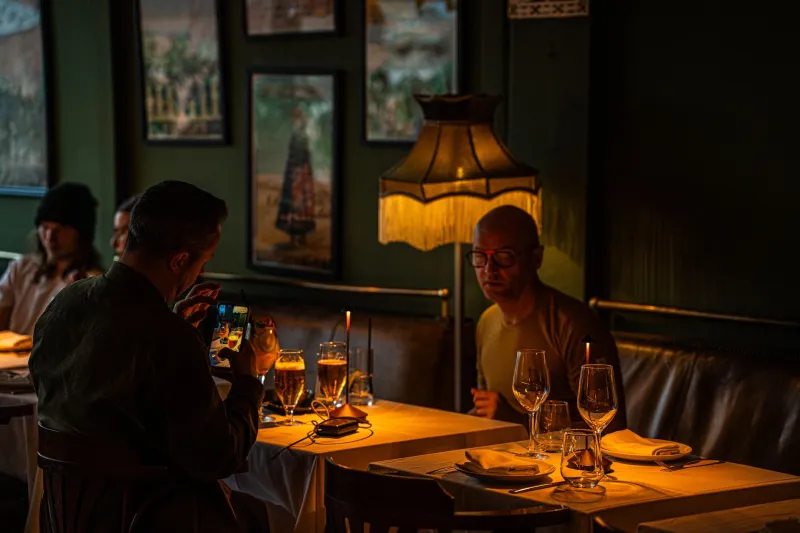
There is a moment, familiar to anyone who has spent a meaningful evening at a wine bar, when the room seems to settle into itself. Conversation finds its rhythm. The music — present but not intrusive — threads through the background. A glass arrives, and the first sip lands differently than it might have at home, alone, in silence. Something about the environment lifts the wine.
Most guests attribute this to mood, to company, to the occasion itself. The truth is considerably more interesting, and considerably more engineered than they realize.
A well-conceived wine bar is not merely a room with a curated list. It is a multisensory instrument, and the acoustics are as deliberately calibrated as the stemware. To overlook this is to leave a meaningful portion of the experience unconsidered.
The Research Is Louder Than You Think
The relationship between sound and taste perception has been the subject of serious academic inquiry for more than two decades. The work of Professor Charles Spence at Oxford University — perhaps the most cited researcher in the field of crossmodal sensory experience — has demonstrated repeatedly that what we hear alters what we taste, not in any vague psychological sense, but in ways that subjects can identify and describe with specificity.
In one frequently referenced study, participants tasting the same wine in two different sonic environments — one featuring low, resonant, brass-heavy music and another featuring light, high-pitched piano — consistently described the wine as tasting bolder and more full-bodied in the first condition, and brighter and more acidic in the second. The wine was identical. The room was not.
Additional research has connected tempo to consumption pace. Faster background music — anything pushing above roughly 120 beats per minute — correlates with quicker sipping and a shorter dwell time per glass. Slower tempos encourage guests to pause, to revisit the glass, to notice what is evolving in the bowl. The implications for a wine bar are significant: the playlist is, in a very real sense, a pacing mechanism.
Crowd noise operates on a separate register. Moderate ambient conversation — the gentle hum of a room that is pleasantly full without being overwhelming — has been shown to increase what researchers call "hedonic response" to food and beverage. There is something in the shared experience of a lively room that heightens pleasure. But past a certain decibel threshold, the effect reverses. Loud, chaotic noise suppresses the ability to detect sweetness and delicate aromatics, which is precisely why a shouted conversation over thumping music is no environment for a thoughtful Burgundy.
Why This Should Change How You Choose Your Seat
For the guest who arrives with intention, this science has immediate practical application.
Consider the architecture of a typical wine bar. The bar itself tends to be the noisiest zone — glassware, shakers if cocktails are served, the percussion of service, the proximity of other guests. It is an energetic space, well suited to a bold red or a lively sparkling pour, wines that assert themselves even in a competitive sonic environment. A Barolo does not flinch at a little noise. A delicate Mosel Riesling, on the other hand, deserves quieter surroundings.
Tables toward the perimeter, or in alcoves removed from the main floor traffic, offer a measurably different acoustic experience. In these pockets, the room's energy recedes to a more manageable hum. This is the terrain for wines that reward patience: aged whites, structured rosés with genuine complexity, anything with a long and evolving finish. The wine needs room to breathe, and so does the conversation around it.
If you arrive at a wine bar and find the music noticeably loud, consider it useful information about what the room is optimized for. Lean into bolder selections. Save the nuanced pour for an evening when the environment is more cooperative.
The Responsibility of the Room
This is where a considered opinion is warranted: a great wine bar carries a genuine obligation to its acoustic environment, and not every establishment takes this seriously enough.
A list that includes twenty-year-old Nebbiolo deserves a room where that wine can be heard, so to speak. When a space is designed with visual elegance — the warm lighting, the marble surfaces, the considered glassware — but the sound environment is an afterthought, the guest is receiving an incomplete experience. The wine may be exceptional. The setting may undercut it entirely.
The most accomplished wine bars in this country treat their acoustic atmosphere as a living element of the menu. The music shifts across the evening: lighter, more open textures during the early hours when guests are arriving and settling, gradually giving way to something warmer and more enveloping as the evening deepens and the room fills. This is not incidental. It is programming.
Temperature, lighting, and service pace are all understood as design elements. Sound deserves the same consideration, and guests who recognize this will find themselves better equipped to evaluate a room's overall ambition.
Practical Notes for the Attentive Guest
A few observations worth carrying into your next visit:
Arrive early when you can. The early-evening room is quieter, more malleable, and often more conducive to the kind of focused tasting that lets you actually learn something about what is in your glass. The same wine ordered at 6:30 p.m. and again at 9:00 p.m. in a crowded room may present quite differently.
Pay attention to what the music is doing. If you notice yourself drinking faster than you intended, check the tempo of what is playing. This is not imagination — it is physiology. Slow down deliberately. Set the glass down between sips. Let the wine complete its thought.
Use the room's energy as a selection guide. A lively, buzzing atmosphere is genuinely excellent for wines with presence and confidence. A quieter corner invites exploration of subtler bottles. Match the wine to the sonic moment, just as you might match it to the season or the occasion.
Tell your server what kind of evening you're after. A skilled wine professional can factor the room's current energy into a recommendation. "Something that will hold up in this room" is a perfectly legitimate request, and a good sommelier will understand exactly what you mean.
The Full Experience, Properly Understood
Wine has always been a social art, inseparable from the conditions of its consumption. The ancients understood this, even if they lacked the vocabulary of crossmodal neuroscience. The room matters. The company matters. The sounds that fill the air between the pours matter.
To walk into a wine bar and attend only to what is in the glass is to experience perhaps half of what is being offered. The other half is the room itself — its temperature, its light, its energy, and yes, its sound. A great wine bar engineers all of these elements with care.
The next time you settle in for an evening, take a moment before the menu arrives. Listen to the room. What you hear will tell you something true about what you are about to taste.