Wednesday Has Been Holding Out on You: The Case for the Midweek Visit
There is a particular kind of evening that most wine bar regulars have never allowed themselves to discover. It does not announce itself with a crowded reservation queue or a thirty-minute wait at the host stand. It does not require you to lean in close just to hear the person across from you. It arrives quietly, somewhere between the end of the workday and the middle of the week, and it rewards those who are paying attention.
The midweek wine bar visit — Tuesday, Wednesday, the occasional Thursday — remains one of the most underutilized pleasures in American dining culture. For many guests, the wine bar exists primarily as a Friday-night institution, a destination reserved for the relief of a completed work week or the launch of a social weekend. That association is understandable. It is also, in a meaningful sense, limiting.
The Room Changes Everything
Walk into a wine bar on a Saturday evening and you are walking into a performance. The energy is high, the tables are full, the noise builds in layers — conversation over music over the percussion of glassware. There is nothing inherently wrong with that atmosphere. But it shapes the experience in ways that are easy to overlook until you have sat in the same room on a quieter night.
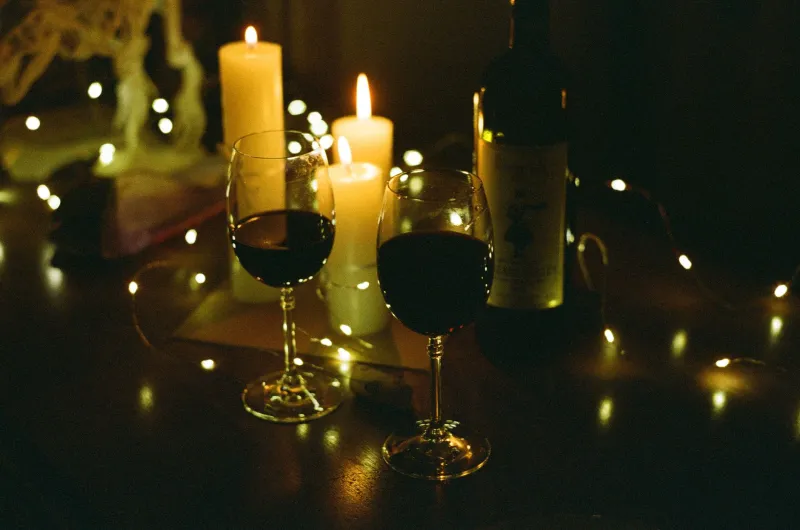
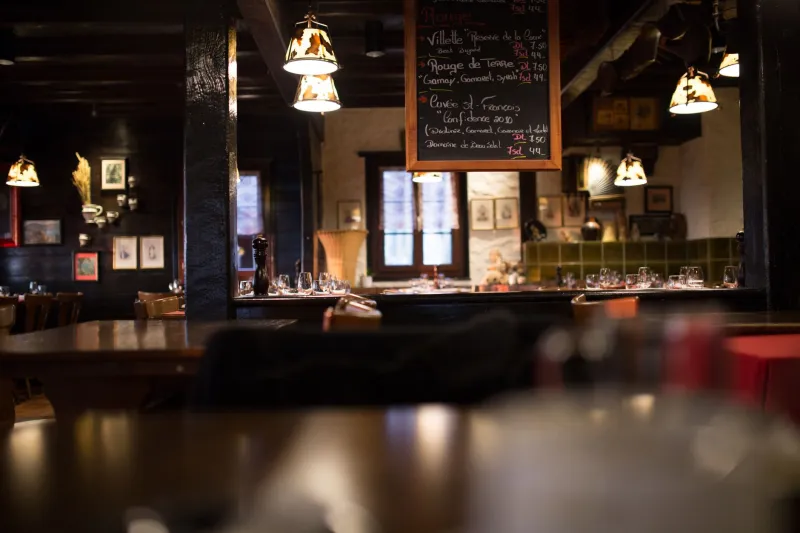
On a Wednesday, the room breathes differently. Conversations stay at a natural register. The lighting, which was always thoughtfully arranged, finally does the work it was designed to do. You notice details — the grain of the bar top, the arrangement of bottles along the back wall, the particular way the candle at your table throws a warm circle onto the menu in your hands. The environment, stripped of its weekend intensity, becomes something more like an invitation than a spectacle.
This is not a small thing. The way we perceive wine is inseparable from the context in which we drink it. Research has long supported what experienced tasters have always known intuitively: ambient noise, sensory crowding, and the pace of a room all affect how we engage with what is in our glass. A quieter setting does not make a wine better in any objective sense, but it creates the conditions for you to actually taste it — to follow a flavor through its arc, to notice what happens in the finish, to be present for the experience rather than simply moving through it.
The Staff Has More to Give
One of the most underappreciated aspects of the midweek visit is what it unlocks in terms of human connection. On a busy Friday or Saturday, the service team is operating at full capacity. They are attentive, professional, and doing excellent work under pressure — but they are also managing a full floor, fielding simultaneous requests, and moving with the compressed efficiency that a packed room demands.
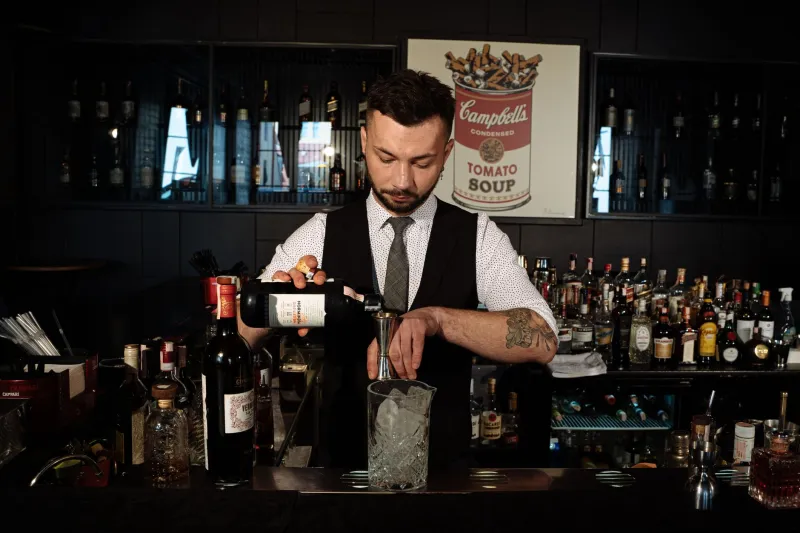
Midweek, the pace shifts. A sommelier or floor manager who might have offered you a brief recommendation on a Saturday night now has the time to tell you the story behind it. Why this producer was chosen for the list. What makes this particular vintage worth noting. Whether the Grüner Veltliner on the by-the-glass menu is something you should order before it disappears, because there are only a few bottles left and it is not being replaced.
These conversations are not incidental to the wine bar experience — they are, for many guests, the most memorable part of it. The knowledge that lives in a well-curated wine program is considerable, and the midweek visit is often the only occasion on which that knowledge flows freely in your direction.
A Different Kind of Occasion
There is also something worth examining in the cultural framing we bring to weeknight dining. Many Americans treat a Tuesday dinner out as a logistical decision rather than a genuine occasion — a solution to the question of what to eat rather than an experience worth anticipating. The wine bar, approached with a slightly different mindset, has the capacity to reframe that entirely.
A midweek evening at a wine bar need not be elaborate to be meaningful. Two glasses of something well-chosen, a small plate or two, an hour without the particular pressures that weekends carry — the social scheduling, the performance of a big night out, the ambient expectation that the evening must justify itself at a certain volume. The quieter visit asks less of you in some respects and returns more in others.
This is especially true for those who come to wine bars not primarily for the social occasion but for the wine itself. If you are genuinely curious about what is in your glass — if you want to learn, to compare, to ask questions and receive real answers — the midweek visit is the format designed for you, even if it was never explicitly marketed that way.
The Practical Advantages Are Real
Beyond atmosphere and conversation, the logistical case for midweek visits is straightforward. Reservations, where required, are far easier to secure. Tables that would require booking weeks in advance on a Friday are often available with a day's notice on a Wednesday. If you prefer to walk in without a reservation, the midweek evening is where that remains a reasonable option at most establishments.
For those who are particular about seating — a preference for the bar, a corner table, a spot with a clear sightline to the room — the midweek visit makes those preferences achievable rather than aspirational. You are not competing with a full house for the seat you actually want.
There is also, for many guests, a genuine pleasure in the walk home or the drive back through a quieter city. The midweek evening ends at a reasonable hour, not because it was cut short, but because it was never racing toward anything. It simply arrived, offered what it had, and let you leave on your own terms.
An Invitation Worth Accepting
None of this is to suggest that the Friday-night wine bar visit lacks merit. There are evenings when the energy of a full room is exactly what you came for, when the noise and the crowd and the sense of occasion are part of the pleasure. Those evenings have their place.
But if you have never given a Tuesday or Wednesday the same consideration you give the weekend, you have been leaving something on the table — or more accurately, in the glass. The quietest night of the week is not a consolation prize for those who could not get a Saturday reservation. It is a different experience, with its own particular rewards, available to anyone willing to arrive on a night the room has not yet learned to rush.
Annabel's is here on those evenings too. The wine list does not change. The kitchen is still running. The candles are lit. The only thing missing is the crowd — and that, it turns out, may be the very thing that makes all the difference.