Who Reaches for the Check: Settling a Wine Bar Bill Without Losing the Evening

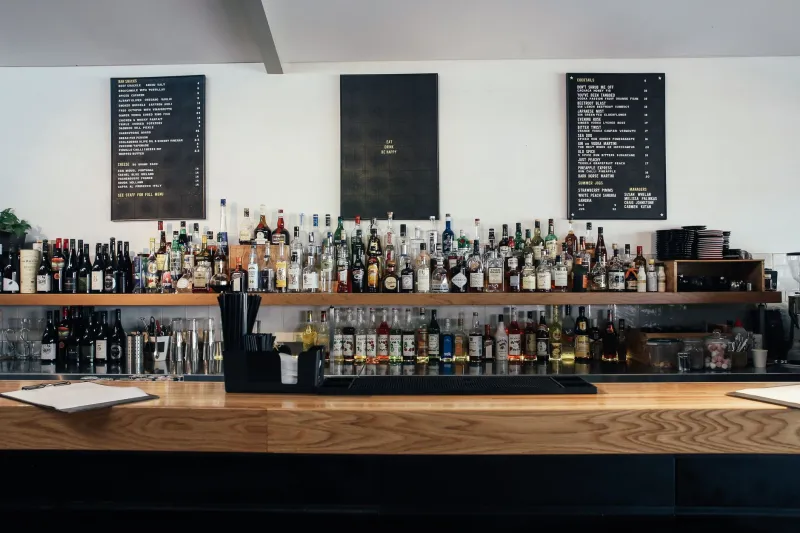
Photo by Photo by Christiann Koepke on Unsplash on Unsplash
The evening has gone well. Two bottles have been emptied, the boards have been cleared, and the conversation has reached the comfortable, slower stage that follows a good meal. Then the check arrives, and the mood shifts by a degree. Someone reaches for it. Someone else says, “No, let me.” A third person is already opening a payment app and asking what they owe, and the arithmetic begins.
In the United States, this small drama plays out nightly, and it is more consequential than it looks. Money is one of the few subjects a group of friends will not discuss plainly, which is why the end of a wine bar evening so often becomes a proxy for questions nobody has asked aloud: Who earns more? Who ordered the expensive glass? Who has been generous before and is quietly keeping score?
The good news is that nearly every version of this scene has a graceful resolution. Most of them begin before the check arrives.
Settle the Method, Not the Amount
Groups rarely discuss how the bill will be handled, because doing so feels mercenary. It is not. A single sentence at the start — “Shall we just split it evenly?” — removes an hour of silent calculation and costs nothing in warmth.
The even split is the default for good reason. When a group shares bottles and plates, itemizing is a fiction; there is no accurate way to divide a bottle of Beaujolais among four people who each had a glass and a half. Even splits are fast, generous in both directions, and end the evening on time.
Itemizing has its place: when one guest drank mineral water all night, when someone arrived after the second bottle, or when the group is large enough that the difference is real. In those cases, say so early rather than at the end. “I'm not drinking tonight, so I'll cover my plates and the tip” is a complete, unembarrassing offer.
Four Tables, Four Arithmetic Problems
The shared tab. One card, everyone pays their share by app. This works when the group is small and socially close. It fails when one person becomes the de facto bookkeeper and spends three days chasing twenty-two dollars.
The itemized table. Fair, but slow, and it invites scorekeeping. Best reserved for large groups and clear asymmetries.
The treat. One guest wants to cover everything. This is generosity, not a maneuver, and it should be accepted with a single warm thank-you rather than a five-minute protest. The gracious response is to say, “That's very kind — the next one is mine,” and mean it.
The two-card split. The quiet American compromise: everything divided across two cards, chips, or one card and one handful of cash. It is fast, discreet, and solves most tables.
Scripts for the Awkward Moment
A few sentences, borrowed and adapted, cover nearly every case.
“Let's do one check and split it three ways — easier for everyone.”
“You covered the last one, so tonight is genuinely ours. Please.”
“I had the two glasses of Burgundy, so let me take a bit more of this.”
“No app required — I have cash, and I'd rather not leave a tab open all night.”
Notice what these lines have in common: each is short, none apologizes, and none explains income, budget, or principle. Length is what makes money conversations uncomfortable. Brevity reads as confidence.
What the House Can Do
The last ten minutes are not solely the table's responsibility. A well-trained wine bar anticipates the problem, and the better ones do so invisibly.
- Splitting a check across two or three cards is routine and should never draw a sigh.
- Separate checks for a party seated together are handled more graciously when requested at the start rather than at the end.
- Automatic gratuity on parties of six or more is disclosed in advance and noted on the menu, which spares everyone the question of whether the tip was included.
- When a bottle is shared, the bar can price it so that the per-glass arithmetic is easy to reconstruct.
- A server who notices one guest has stopped drinking will quietly offer to remove the remaining charge, or bring the water without comment.
The best service at this stage is nearly silent. A check presented without ceremony, split as asked, returned promptly, and settled without commentary — that is the standard. The guest should remember the wine, not the transaction.
The Generosity Ledger
Americans keep a rough, unspoken ledger of who paid for what, and it is rarely as balanced as we imagine. Some friends always reach first. Some never do. Neither pattern is usually malicious; it reflects circumstance, temperament, and how each person was raised about money.
If you are the one who always reaches, allow yourself to be beaten to the check occasionally. If you are the one who never does, do it once, without announcement. The gesture is remembered far longer than the amount.
And if the evening has been genuinely lovely, the easiest way to honor it is to settle the arithmetic quickly, leave the table clean, thank the person who poured, and step out into the night together rather than standing on the sidewalk dividing a total.
The point of the evening was never the math.