The Bottle That Meant Everything: Why the Moment Always Outranks the Score
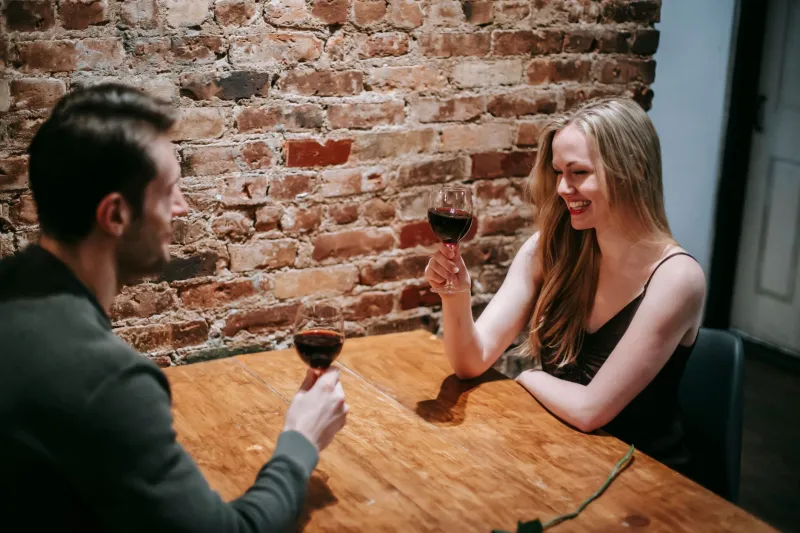
Ask anyone to recall the most memorable glass of wine they have ever had, and something interesting happens. Rarely does the answer involve a celebrated vintage or a bottle of extraordinary provenance. More often, it is a modest Côtes du Rhône opened at a kitchen table after a long week. A sparkling wine cracked open in a parking lot to toast a promotion nobody had expected. A simple Grenache shared between two people who had just decided to forgive each other.
The wine was unremarkable. The moment was not.
This is the central paradox of wine culture, and it is one that no rating system, no critic's column, and no price point has ever successfully resolved: the finest wine is not always the best wine. The best wine is always the one that arrives at exactly the right time.
What the Numbers Cannot Measure
The wine industry has constructed an elaborate architecture of evaluation. Points, medals, tasting notes, vintage charts—all of it exists to approximate quality in transferable, communicable terms. And within its own parameters, this system works reasonably well. A ninety-five-point wine from a respected critic genuinely tends to be a well-made, complex, rewarding bottle.
But the system measures the wine in isolation. It cannot measure you. It cannot account for the fact that you are sitting across from someone you love, or that you ordered this particular glass because the name on the label was the same as the town where your grandmother was born, or that this is the first time in six months you have felt genuinely, uncomplicated happy.
Those variables do not appear on any label. They are, however, the variables that most consistently determine whether a wine is remembered or forgotten.
Neuroscience offers some support for this intuition. Memory and emotion are processed in overlapping regions of the brain, and sensory experiences—taste and smell most powerfully—become deeply encoded when they occur alongside emotional significance. The wine you drink at a pivotal moment does not merely taste good. It becomes a permanent sensory record of that moment, retrievable in remarkable detail years later with a single sip of something similar.
No rating system can engineer that. Only life can.
The Celebration That Called for Something Humble
Consider a scenario familiar to many: a quiet, personal victory—a difficult project completed, a health scare resolved, a relationship repaired—that calls for acknowledgment but not spectacle. The instinct, sometimes, is to reach for something impressive, something whose quality matches the significance of the occasion.
But significance and grandeur are not the same thing. There are moments that ask for ceremony, and there are moments that ask for warmth. A meticulously aged Barolo, opened alone on a Tuesday evening with no one to share it, can feel more like an obligation than a celebration. A chilled, slightly imperfect Beaujolais—opened because it was there, because the moment arrived unexpectedly, because it was exactly what the evening needed—can feel like grace.
The wine does not need to be worthy of the moment. The moment makes the wine worthy.
Recovery, Ritual, and the Glass That Asks Nothing of You
There is another category of wine experience that the points system is entirely unequipped to address: the recovery pour. The glass ordered not to explore or impress, but simply to exhale. After a difficult conversation, a long drive, a day that asked too much—the wine that meets you there is performing a function no critic has ever assigned a score.
Regulars at wine bars understand this instinctively. They have their recovery wine—the glass they order when they need the room to hold them rather than challenge them. It might be a straightforward Pinot Grigio, or a familiar house red, or a glass of something sparkling that offers effervescence without demands. The wine is not the point. The relief is the point, and the wine is what makes the relief possible.
In these moments, the sommelier who reads the room and recommends something approachable and uncomplicated is providing a service more valuable than any technically impressive pairing. Knowing when a guest needs to be held rather than educated is a form of expertise that no certification fully captures.
The Shared Bottle and the Arithmetic of Connection
Perhaps the most compelling argument against credential-chasing is the shared bottle. When wine is opened between people—at a table, at a bar, on a back porch—it enters a social equation that fundamentally alters its value. A bottle divided among three people who are genuinely glad to be together is worth more, experientially, than a bottle of twice the price consumed in distracted solitude.
This is not sentiment overriding judgment. It is judgment, properly applied. Wine is, at its most fundamental level, a social technology. It has been used for millennia to mark agreements, solidify relationships, celebrate transitions, and ease the friction of human interaction. To evaluate it purely on its chemical composition and structure is to misunderstand what it has always been for.
The right bottle for the right table, at the right hour, among the right people—that is the equation that produces memorable evenings. The score on the label is, at best, a single variable in a much larger and more interesting calculation.
Choosing With Feeling, Not Just Knowledge
None of this is an argument against quality, or against the genuine pleasure of a well-made, thoughtfully produced wine. It is, rather, an argument for a different kind of attention when selecting what to order or open.
Before asking what the wine scores, ask what the evening needs. Before consulting the vintage chart, consider who is sitting across from you. Before reaching for the most prestigious name on the list, pause long enough to determine whether this is a moment that calls for prestige or for comfort, for exploration or for familiarity, for ceremony or for ease.
The answers to those questions will guide you to a wine that is right in the only way that ultimately matters. Not right on paper. Right for tonight.
At Annabel's, we believe that every glass worth drinking is earned by the moment it inhabits. The list is here to help you find it.
