What to Order When the Stakes Feel High: Wine as a Bridge on a First Date
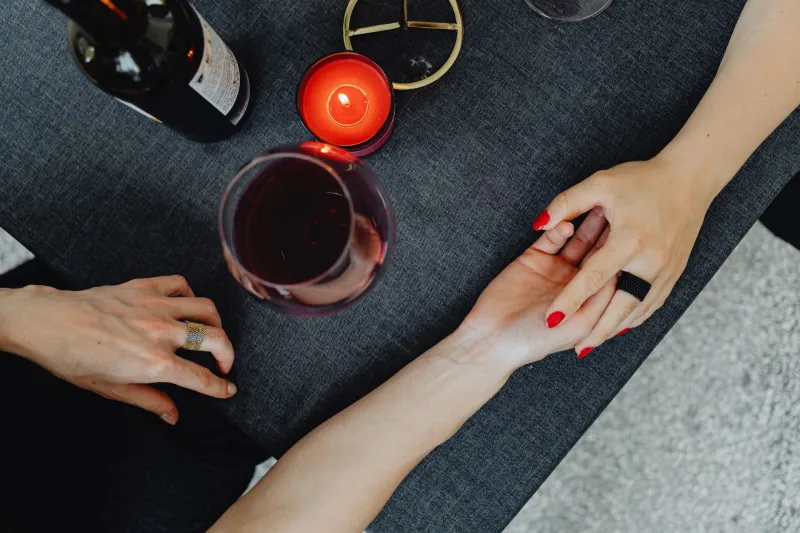
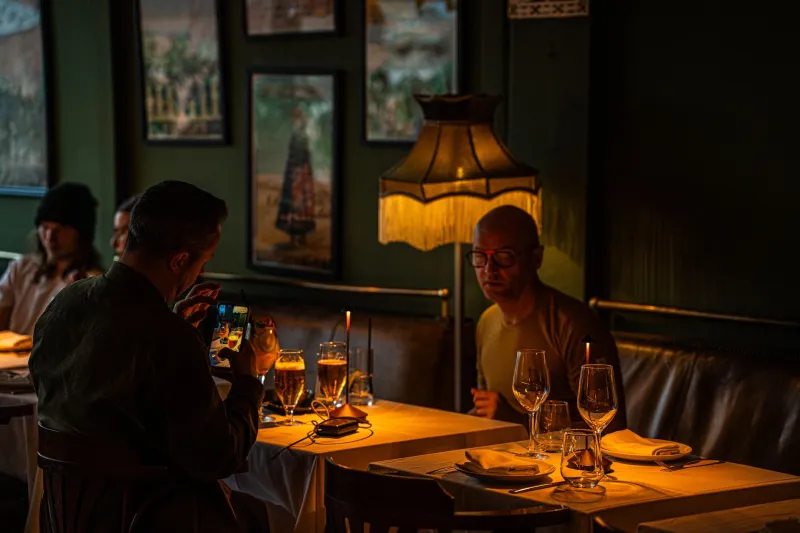
There is a particular kind of silence that descends at a table for two when neither person quite knows how to begin. The menus are open. The water has been poured. Someone says something about traffic, and the other person laughs a little too quickly. Anyone who has navigated the early minutes of a first date will recognize the sensation — a mixture of genuine interest and low-grade social anxiety that no amount of preparation entirely eliminates.
What most people do not realize is that the wine list sitting between them is not merely a list of beverages. It is, if approached with even a small degree of intention, one of the most effective conversation tools in the room.
Why Wine Works Where Small Talk Doesn't
The appeal of wine as a social catalyst is not accidental. Unlike most topics that arise in the first thirty minutes of a date — professional titles, neighborhood preferences, weekend routines — wine occupies a space that is simultaneously personal and low-stakes. Sharing an opinion about a grape variety or a region requires a degree of self-disclosure without demanding vulnerability. You are not revealing your fears or your family history. You are simply saying, I tend to prefer something with a little more structure, and in doing so, you have revealed something true about yourself in a way that feels entirely safe.
This is the quiet genius of wine as a social instrument. It creates what might be called an entry point — a shared object of attention that allows two people to discover their compatibility without the pressure of direct interrogation.
The Varietal That Sets the Right Tone
For a first date at a wine bar, the opening pour carries more weight than most diners appreciate. Choose something too bold and you risk signaling impatience; choose something too timid and the evening may never quite accelerate. The most reliable choice for a table still finding its rhythm is a well-made Grüner Veltliner or a Chenin Blanc from the Loire Valley.
Both varietals share a quality that is enormously useful in this context: they are interesting enough to prompt genuine curiosity without being so esoteric that they require explanation. A Grüner Veltliner, with its characteristic white pepper note and bright acidity, almost always prompts the question, What is that? — and that question is the beginning of a conversation, not the end of one. A Chenin Blanc, meanwhile, offers a spectrum of expression that invites comparison and opinion. Is it honeyed? Is it mineral? Does it remind you of something you can't quite name? These are not trivial questions. They are small acts of introspection shared across a table.
Pairing Food to the Moment, Not Just the Bottle
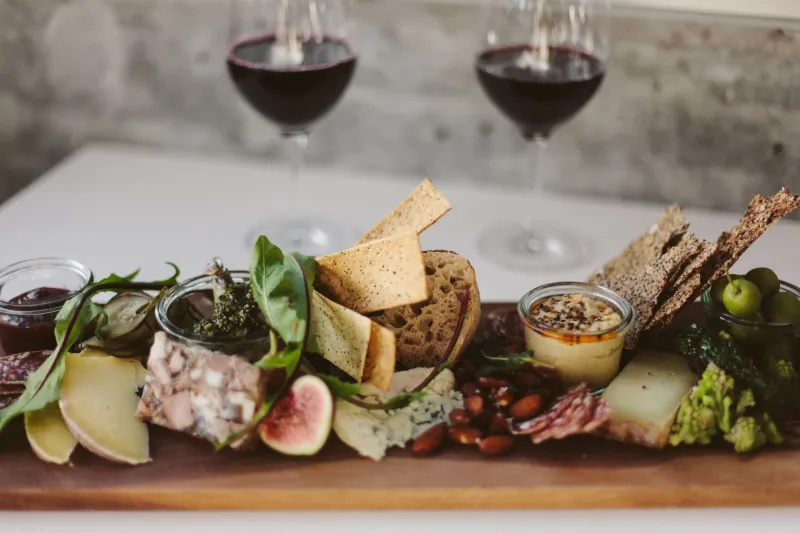
The food choices made alongside that first glass matter considerably, and not solely for reasons of flavor compatibility. Shared plates, as any experienced wine bar diner understands, change the dynamic of a table. When two people are navigating the same board of charcuterie or dividing a small plate of marinated olives and aged cheeses, the physical act of sharing creates a subtle sense of collaboration. The date is no longer two individuals performing for each other — it is two people engaged in a common experience.
For an opening round, consider building around a simple charcuterie selection anchored by a creamy, approachable cheese — a young Comté or a domestic triple-crème — alongside something cured and lightly smoky. This combination pairs beautifully with the Grüner or Chenin, but more importantly, it gives the table something to do. Reaching for the same piece of bread, debating which cheese is more interesting, discovering that one of you has a strong opinion about cornichons — these are the moments from which actual connection is built.
When the Conversation Deepens, So Should the Wine
If the evening is going well — if the silences have become comfortable rather than anxious, if the laughter has started arriving without effort — it is worth considering a second bottle that reflects that shift. This is the moment to move toward something with a little more presence and complexity.
A Willamette Valley Pinot Noir from Oregon is an excellent choice for this transition. It carries enough weight to feel like a deliberate escalation without overwhelming the palate, and its characteristic notes of red fruit, earth, and subtle spice make it endlessly discussable. American diners, in particular, tend to respond warmly to domestic wines that carry a strong sense of place — and a bottle from the Pacific Northwest gives the table something to talk about beyond the glass itself. Where have you been? Where do you want to go? A wine with a story can open a conversation about the larger world with remarkable ease.
Pair this with something slightly more substantial: a roasted mushroom preparation, a warm lentil dish, or a selection of aged cheeses with a little more character. The evening has earned a bit more richness.
The Gesture That Says More Than Words
There is one final consideration that is easily overlooked in the logistics of wine selection and food pairing, and it is perhaps the most important of all: the act of asking.
Asking your date what they tend to enjoy — not what they know, but what they enjoy — is an act of genuine attention. It communicates interest without pressure. It invites participation rather than performance. And it immediately reframes the wine list from a potential source of anxiety into a shared project.
The sommelier or server at a well-run wine bar is an ally in this endeavor. Do not hesitate to describe the mood you are after rather than the specific varietal you want. We're looking for something approachable but interesting is a perfectly reasonable instruction, and any knowledgeable staff member will understand exactly what you mean.
A Final Word on Unhurried Evenings
The most important thing a wine bar can offer a first date is time — and the implicit permission to use it slowly. There is no obligation to rush through a glass or to fill every pause with conversation. Some of the most meaningful evenings begin in near-silence and arrive at something genuine only after an hour of careful, unhurried attention.
Order thoughtfully. Share generously. Ask good questions. The wine will do the rest.